
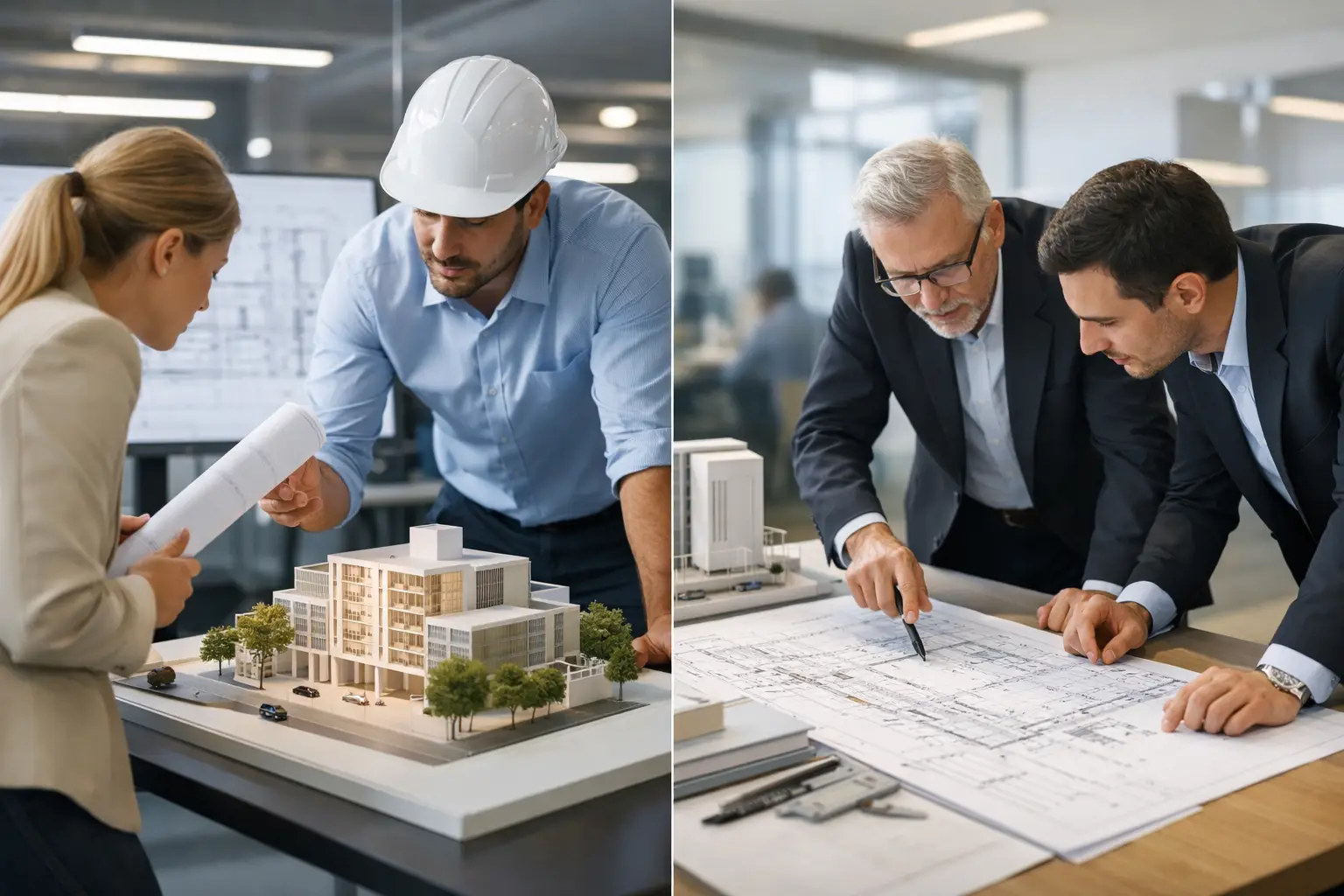
Design and Construct vs Traditional Tender
Melbourne office fitouts since 1985 3,500+ workplaces Fixed price 5.0 from 36 Google reviews
A workplace project can look straightforward on a floor plan, then become complicated once landlord approvals, base-building rules, services, furniture lead times and business continuity enter the picture. The choice between design and construct vs traditional tender shapes who manages those moving parts, when costs become clear and how much responsibility stays with your internal team.
For an office relocation, refurbishment or complete fit-out, there is no universally correct procurement method. The right approach depends on how defined your brief is, how quickly you need to move, the level of design certainty required and the resources available to manage multiple parties. The key is to understand where accountability sits before committing to a process.
What is design and construct?
Under a design and construct model, one delivery partner takes responsibility for developing the workplace design and delivering the construction works. The same team can coordinate the design, documentation, approvals, trades, joinery, furniture, finishes and project programme.
For clients, this creates a single point of accountability. Rather than managing a designer, builder, furniture supplier and separate consultants, the client works with one project team that is responsible for bringing the agreed solution to life.
A well-run design and construct process usually begins with workplace discovery. This is where the team considers headcount, work patterns, meeting requirements, technology needs, brand, budget, accessibility and future growth. The design is then developed with practical construction knowledge already in the room. That matters because decisions about ceilings, partitions, lighting, acoustics and joinery are assessed not only for appearance, but also for cost, buildability and programme impact.
Once the scope is sufficiently defined, the project can be delivered under an agreed fixed-price arrangement. This does not mean every possible change is included. It means the agreed inclusions, exclusions and assumptions should be clear, so the client understands what their investment covers before works commence.
What is a traditional tender?
A traditional tender separates design from construction. The client first engages an architect or interior designer to prepare the concept, detailed drawings and specifications. Those documents are then issued to several builders, who submit prices to construct the works as designed.
This method can work well where the design must be independently developed before a builder is selected. It is often used for complex projects, organisations with formal procurement policies, or situations where a client wants a competitive comparison between multiple construction contractors.
The advantage is that the client retains direct control over the design team and can seek several construction prices against the same documented scope. In theory, this makes tender comparisons more straightforward.
In practice, that outcome depends on the quality and completeness of the documentation. If drawings leave room for interpretation, tenderers may price different assumptions. A lower initial tender may exclude elements another builder has allowed for, creating variations later. Comparing the final figure alone can therefore be misleading unless inclusions, exclusions, preliminaries, programme allowances and provisional sums are carefully reviewed.
Design and construct vs traditional tender: the practical differences
The central difference is not simply whether one company or several companies are involved. It is how risk, coordination and decision-making are managed.
Cost certainty and budget control
With design and construct, cost planning can happen alongside design development. The delivery partner can identify expensive choices early and offer alternatives before the design is fully locked in. For example, a feature ceiling, bespoke reception desk or extensive glazing package may be adjusted while still meeting the design intent and budget.
Traditional tender often provides price certainty later, after detailed documentation has been prepared and builders have responded. That can be appropriate for clients who need a highly specified solution, but it may mean investing significantly in design before knowing whether the proposed fit-out is affordable to build.
Neither model removes the risk of changes. If a client adds rooms, changes finishes or discovers an unforeseen base-building condition, costs may change under either method. The difference is that design and construct typically provides earlier visibility of the cost consequences of those decisions.
Programme and speed to occupancy
For businesses with a lease expiry, relocation date or growth-driven need for more space, time is often as important as cost. Design and construct can shorten the overall programme because design, procurement and construction planning overlap. Long-lead items such as workstations, seating, joinery components and specialist finishes can be identified early.
A traditional tender is more sequential. The design must be documented, the tender issued, submissions assessed, a builder appointed and construction commenced. This may offer more time to refine the brief, but it can extend the path to occupancy.
A shorter programme is only valuable if it is realistic. A dependable delivery partner will allow for approvals, landlord requirements, building access, after-hours work and the practical lead times of materials. Promising an aggressive completion date without addressing these constraints creates unnecessary pressure later.
Design control and independence
Traditional tender may suit a client that wants an independent designer to lead the workplace vision and retain full control of the design before construction pricing begins. This can be valuable for highly specialised environments, major corporate projects or organisations with established internal property teams.
However, design independence does not automatically mean better design outcomes. A workplace must function after it has been built. Early input from construction, services and furniture specialists can help ensure the design supports the way people work while remaining practical to deliver.
In a design and construct arrangement, clients should still expect to be involved in important choices. The layout, finishes, furniture, branding elements and operational requirements should be developed collaboratively. Single-point accountability should simplify decisions, not remove the client’s voice.
Risk and project management workload
Traditional tender places more coordination responsibility on the client, their project manager or their design consultant. Someone must manage the interface between the designer, builder, landlord, consultants, IT providers and furniture suppliers. When an issue arises, determining where responsibility sits can take time.
Design and construct concentrates that responsibility with one delivery partner. The client still approves key decisions, but the partner manages the coordination between design intent, construction sequencing, permits, trades and installation. This is particularly useful for office managers, operations leaders and business owners who need a new workplace delivered without taking focus away from their day-to-day role.
The model is only as strong as the provider’s process. Ask who will manage the project, how variations are handled, what is included in the fixed price, how approvals will be coordinated and how progress will be communicated. Clear answers are more useful than broad promises.
When design and construct is likely to suit your business
Design and construct is often a practical choice when you want one accountable team from initial workplace planning through to handover. It is well suited to businesses that need to manage a fixed budget, have a firm move date, lack an internal project delivery team or want construction and furniture decisions coordinated from the outset.
It can also be valuable when the brief is still evolving. Many organisations know they need a better workplace but have not yet decided on the right mix of focused workspaces, collaboration areas, meeting rooms, storage and client-facing zones. An experienced fit-out partner can turn those operational needs into a defined, buildable scope.
For Melbourne businesses working within landlord-controlled commercial buildings, having one team manage building requirements and trade coordination can reduce avoidable delays. This is especially relevant where works must occur outside business hours or access is tightly managed.
When traditional tender may be the better fit
Traditional tender can be appropriate when your organisation has already commissioned comprehensive design documentation and wants to procure construction through a formal competitive process. Government, education and larger corporate organisations may have governance requirements that make this approach necessary.
It may also suit projects where the design must be led by a particular consultant, or where a detailed specification has been developed independently and is unlikely to change. In these cases, the client should allow sufficient time to assess tender submissions properly rather than choosing solely on the lowest number.
A traditional tender does not need to be adversarial. The best outcomes still come from clear documentation, realistic budgets and builders who identify risks openly before site works begin.
Questions to ask before selecting a delivery model
Before choosing a path, consider whether your workplace brief is genuinely complete, whether your budget is fixed, and whether your team has capacity to coordinate multiple consultants and suppliers. Consider the consequences of a delayed move, too. A lower construction price may not represent better value if it creates disruption, extended rent overlap or unplanned internal workload.
Ask each prospective provider how they will protect your programme, manage changes and report on costs. Request clarity around what happens if site conditions differ from expectations, what furniture is included, and who is responsible for permits, landlord approvals and defect rectification.
The right delivery model is the one that gives your organisation confidence in the outcome, not simply the one that appears cheapest at the start. When responsibilities are clear and the project team understands how your business operates, a new workplace becomes a managed business decision rather than a distraction from one.