25 April 2026 · Integrity Office
A meeting room that looks polished but feels awkward to use usually has a furniture problem, not a people problem. The best meeting room furniture ideas make discussions easier, support different meeting styles and help the room work harder across the day.
For most businesses, that means moving past the old formula of one oversized table, a row of heavy chairs and little else. Teams now switch between formal client presentations, quick internal check-ins, video calls and project workshops. Furniture needs to keep up with that reality while still reflecting your brand, budget and the way your people actually work.
Why meeting room furniture ideas matter more than ever
Meeting rooms are under pressure to do more with less space. In many offices, one room might serve as a boardroom in the morning, a recruitment interview space at midday and a collaboration zone in the afternoon. If the furniture is too rigid, the room becomes frustrating fast.
Good furniture choices improve more than appearance. They affect comfort, acoustic performance, technology access, circulation space and how confidently your business presents itself to clients and staff. In practical terms, the right setup can reduce room downtime, support hybrid meetings and help avoid a costly redesign later.
That is why furniture selection should be considered as part of the wider workplace plan, not as a final styling decision.
Start with the room’s real job
Before choosing finishes or chair styles, it helps to define what the room is meant to do most often. A leadership boardroom has different needs from a project room or a small meeting space used for one-on-ones. This sounds obvious, but many businesses try to make every room do everything, which often leads to furniture that suits nothing particularly well.
Capacity is one part of the decision, but not the whole story. A room for eight people may still need generous table depth if laptops, papers and catering are common. A smaller space used for video calls may need a tighter footprint but better cable access and camera sightlines.
Once the intended use is clear, the right furniture direction becomes easier to judge.
1. Choose a table shape that fits the conversation
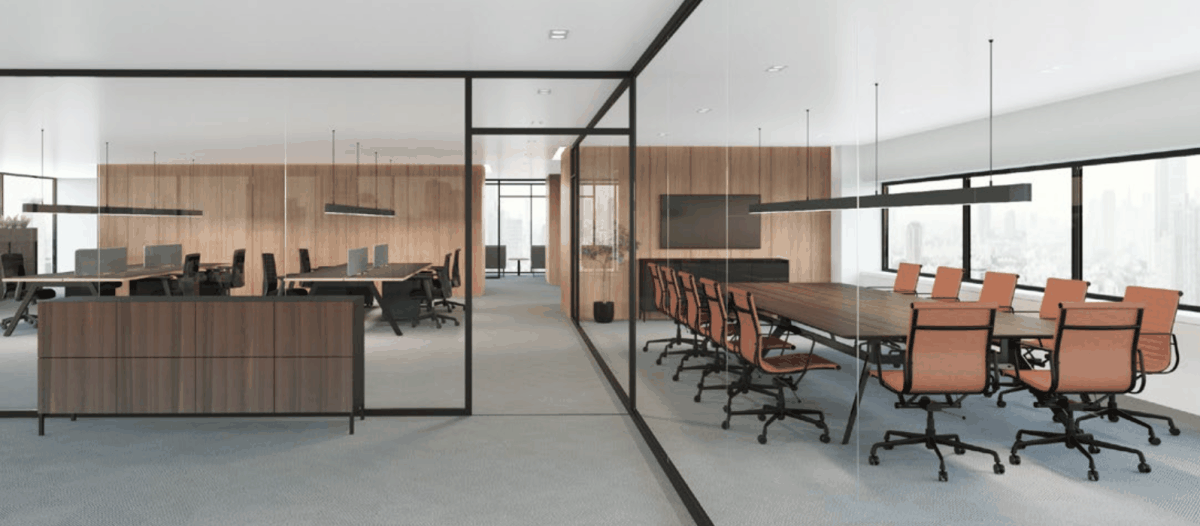
The table usually sets the tone of the room. Rectangular boardroom tables still make sense for formal decision-making and client-facing spaces because they create structure and presence. They are also efficient in longer rooms where circulation is limited on the sides.
Round tables tend to feel more inclusive and work well in smaller meeting rooms where collaboration matters more than hierarchy. Boat-shaped and oval tables can offer a useful middle ground, giving a professional look while improving sightlines across the table.
The trade-off is space efficiency. A round table may feel better for discussion, but it can waste floor area in narrow rooms. A large rectangular table may maximise seating, but it can make a compact room feel cramped. The best answer depends on room dimensions, meeting style and whether technology needs to be built into the surface.
2. Invest in chairs people can sit in for an hour
Meeting chairs are often chosen for looks first and comfort second. That usually backfires. If people are shifting around 20 minutes into a meeting, concentration drops and the room feels less professional than it should.
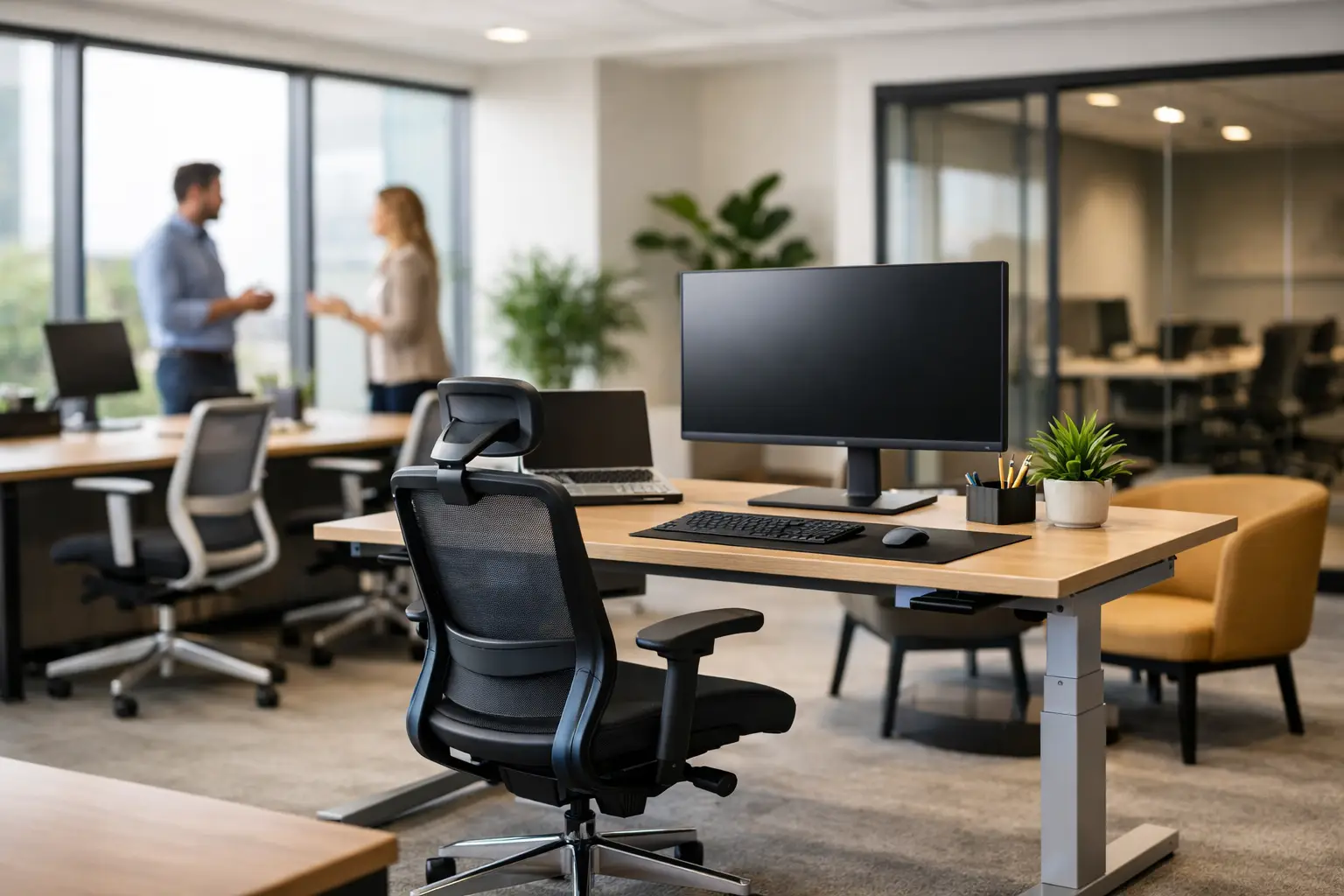
A good meeting chair does not need full workstation-level adjustment, but it should offer proper back support, comfortable seat padding and the right seat height for the table. In boardrooms and formal meeting spaces, upholstered chairs often create a more refined feel. In high-use collaborative rooms, lighter task-style seating may be the more practical option.
This is also where durability matters. Commercial-grade fabrics, replaceable components and finishes that tolerate regular cleaning are worth considering, especially in healthcare, education and shared office environments.
3. Build in power and data from the start
One of the most useful meeting room furniture ideas is also one of the most overlooked: making it easy for people to plug in without crawling under a table. Power and data access should be planned with the furniture, not added as an afterthought.
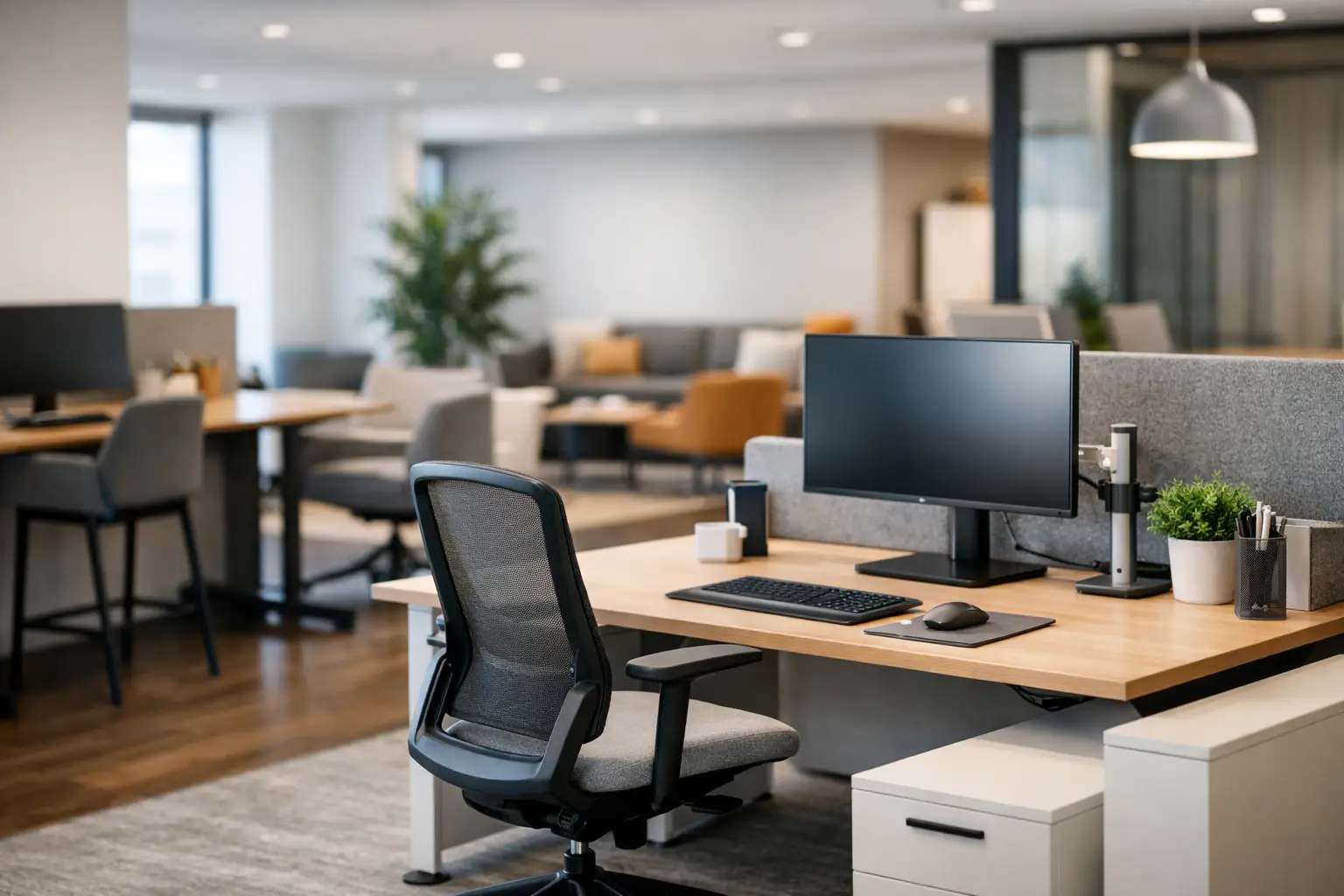
Integrated cable trays, in-table power modules and discreet floor access points keep the room tidy and reduce setup friction. They also improve safety by limiting loose leads across walkways. For hybrid meetings, this becomes even more important because screens, speakerphones and laptops all need dependable connections.
There is a visual trade-off here. Some power modules are more visible than others, and premium concealed solutions can cost more upfront. Still, if the room is used frequently, the convenience usually justifies the investment.
4. Use modular furniture in multi-purpose rooms
Not every meeting room should be fixed in one format. If a space needs to host training, workshops, team sessions and formal meetings, modular furniture can give the room far more value.
Flip-top tables, mobile tables and lightweight stacking chairs allow staff to reconfigure the room quickly without needing a facilities team each time. This is particularly useful in growing businesses where space needs shift regularly, or in offices where every square metre has to earn its keep.
The key is choosing commercial products that still feel substantial. Some modular pieces look temporary or unstable, which can weaken the impression of the room. Good modular furniture should be easy to move but still aligned with the overall look and feel of the workplace.
5. Add soft seating where formal isn’t the goal
Not every conversation belongs around a boardroom table. Informal meeting spaces can be highly effective for one-on-ones, creative sessions and quick catch-ups, especially in workplaces trying to encourage movement and more natural collaboration.
Soft seating, occasional tables and lounge-style meeting settings can help create that shift. These work well in breakout zones, quiet corners and casual meeting rooms where the goal is comfort and openness rather than formality.
That said, soft seating is not ideal for every task. If people need to take notes, use laptops for long periods or present to a screen, lounge settings can become impractical. The best approach is often to mix room types across the office rather than asking one furniture style to solve every need.
6. Think beyond the table with storage and support pieces
A well-functioning meeting room often needs more than a table and chairs. Credenzas, mobile storage, AV units and presentation furniture can make the room easier to manage and keep clutter out of sight.
A credenza, for example, can hold meeting materials, spare cables, catering items or display equipment while also giving the room a more resolved, professional finish. In client-facing spaces, these details matter. They help the room feel intentional rather than assembled from leftover pieces.
Support furniture also helps protect the main meeting space from becoming a dumping ground for boxes, stationery and tech accessories that should have a home elsewhere.
7. Match finishes to brand and workload
Furniture finishes need to look right, but they also need to hold up. Timber-look tops, laminate surfaces, powdercoated frames and commercial upholstery all offer different benefits depending on the level of use and the image you want to project.
A law firm or executive office may prefer darker finishes and a more refined boardroom feel. A creative business may lean towards lighter tones, softer textures and a less corporate look. In both cases, the room should still connect with the rest of the fit-out so it feels consistent with the broader workplace.
This is where experienced planning helps. The most attractive option on a sample board is not always the best long-term choice if it scratches easily, shows every mark or dates too quickly.
8. Leave enough space around the furniture
Even excellent furniture can fail in the wrong layout. Rooms need comfortable clearance around chairs, access to doors and enough space for screens, whiteboards and movement between seats.
A common mistake is choosing a table for maximum capacity without allowing for how people enter, sit down and move around the room. On a floor plan it may fit. In daily use it can feel tight and frustrating.
As a guide, circulation should feel natural rather than forced. If chairs hit walls, power access is blocked or people have to squeeze past each other to leave a meeting, the room is not working as well as it should.
9. Design for hybrid meetings, not just in-person ones
Hybrid work has changed what good meeting rooms need to do. Furniture now has to support camera angles, screen visibility, microphone pickup and equitable participation for people joining remotely.
That can affect table shape, seating positions and the placement of technology. A long table may work well for in-person meetings but create poor sightlines on camera. Chair backs that are too high can interfere with visual lines. Glossy table finishes can produce glare under lighting and on video.
When meeting room furniture ideas are assessed through a hybrid lens, businesses often end up with more practical, future-ready spaces. This is especially relevant for organisations across Melbourne managing client meetings, regional teams or interstate stakeholders through a mix of face-to-face and virtual sessions.
Getting the balance right
The best meeting rooms are rarely the most expensive. They are the ones where furniture, layout and technology have been thought through together. That usually means balancing appearance with comfort, flexibility with durability and budget with long-term use.
For some businesses, a formal boardroom is still the right investment. For others, a mix of agile meeting spaces will deliver better value. It depends on your team, your clients and how your workplace operates day to day.
If there is one useful principle to keep in mind, it is this: choose furniture based on how people actually meet, not how you assume they should. When the room supports the way your business works, everything from internal collaboration to client confidence tends to improve with it.