16 May 2026 · Integrity Office
A branded workplace is often judged in the first 30 seconds. A client walks through reception, a candidate arrives for an interview, or a team member returns after working remotely for months. Before anyone says a word, the space is already communicating. If you are working out how to design branded workplace environments that feel credible, practical and true to your business, the goal is not to plaster logos on every wall. It is to shape a workplace that reflects who you are and supports how your people work.
For most organisations, that means balancing three things at once: brand identity, operational needs and budget. Get the balance right and the office becomes more than a place to sit at a desk. It starts reinforcing culture, improving the day-to-day experience and giving visitors confidence that the business is well run.
What a branded workplace really means
A branded workplace is not just a styled office. It is a workspace designed to express the character, values and priorities of the organisation through layout, finishes, furniture and user experience.
That might show up in obvious ways, such as colours, signage and custom joinery. More often, it is expressed through decisions that feel less cosmetic and more strategic. A people-focused brand may prioritise welcoming breakout areas, quiet rooms and strong staff amenity. A business built on precision and trust may lean towards clean lines, disciplined planning and consistent materials. A creative team may want more flexibility, collaboration zones and visual energy. The brand is not only what people see. It is what they experience.
This is where some projects go off track. Businesses can spend heavily on the visual layer while ignoring how the space performs. The result may look polished in photos but frustrate staff every day. A branded workplace has to work first. The branding should strengthen function, not compete with it.
How to design branded workplace spaces without losing function
The best starting point is not a mood board. It is a clear brief that connects your brand to the way the business operates.
Ask what you want the space to say, but also what it needs to do. Are you trying to support growth, improve staff retention, bring teams together, impress clients or encourage a stronger return to the office? Usually it is a mix. The clearer those priorities are, the easier it is to make smart design decisions later.
At this stage, it helps to look closely at how people actually use the workplace. Many businesses still allocate space based on old habits rather than current behaviour. Boardrooms sit empty, storage takes up premium floor area, and teams without enough meeting space end up taking calls in corridors. A branded workplace should reflect your current culture, not a version of the business from five years ago.
That is why briefing, staff input and space planning matter so much. They stop the project becoming a branding exercise in isolation and turn it into a workplace strategy with a clear purpose.
Start with brand values, not brand colours
It is tempting to begin with palette and finishes, but the stronger approach is to start with values and personality. If your organisation stands for reliability, innovation, care or collaboration, each of those ideas should influence the environment differently.
For example, a healthcare or education setting may need branding to feel calm, trustworthy and accessible rather than bold. A professional services firm may want warmth and polish without becoming overly corporate. A fast-growing technology business may prefer a more relaxed and adaptable environment, but still need strong acoustic control and disciplined planning.
When values lead the process, visual choices become easier. Colours, textures, graphics and furniture styles can then support the bigger picture instead of becoming disconnected decorations.
Plan the experience from entry to exit
One of the most useful ways to design a branded workplace is to think through the experience in sequence. Reception matters, but it is only one moment.
Consider what staff and visitors encounter as they move through the space. The entry should feel intentional. Meeting rooms should support the level of professionalism your brand promises. Workstations should suit the focus and interaction levels your teams need. Kitchens, lounges and shared zones should reflect how informal or structured your culture really is.
This end-to-end thinking often reveals practical gaps. A company that promotes collaboration but offers nowhere for quick team discussions is sending mixed signals. A business that values staff wellbeing but has poor lighting, limited breakout space and little ergonomic support is doing the same. Brand credibility is built through consistency.
The design elements that carry your brand
Once the planning is right, the physical design can do a lot of heavy lifting. Some elements speak loudly, while others work in a quieter but equally important way.
Layout is one of the strongest brand signals. Open, connected planning can suggest accessibility and teamwork, while more enclosed spaces may support confidentiality, focus or hierarchy. Neither approach is automatically better. It depends on the organisation.
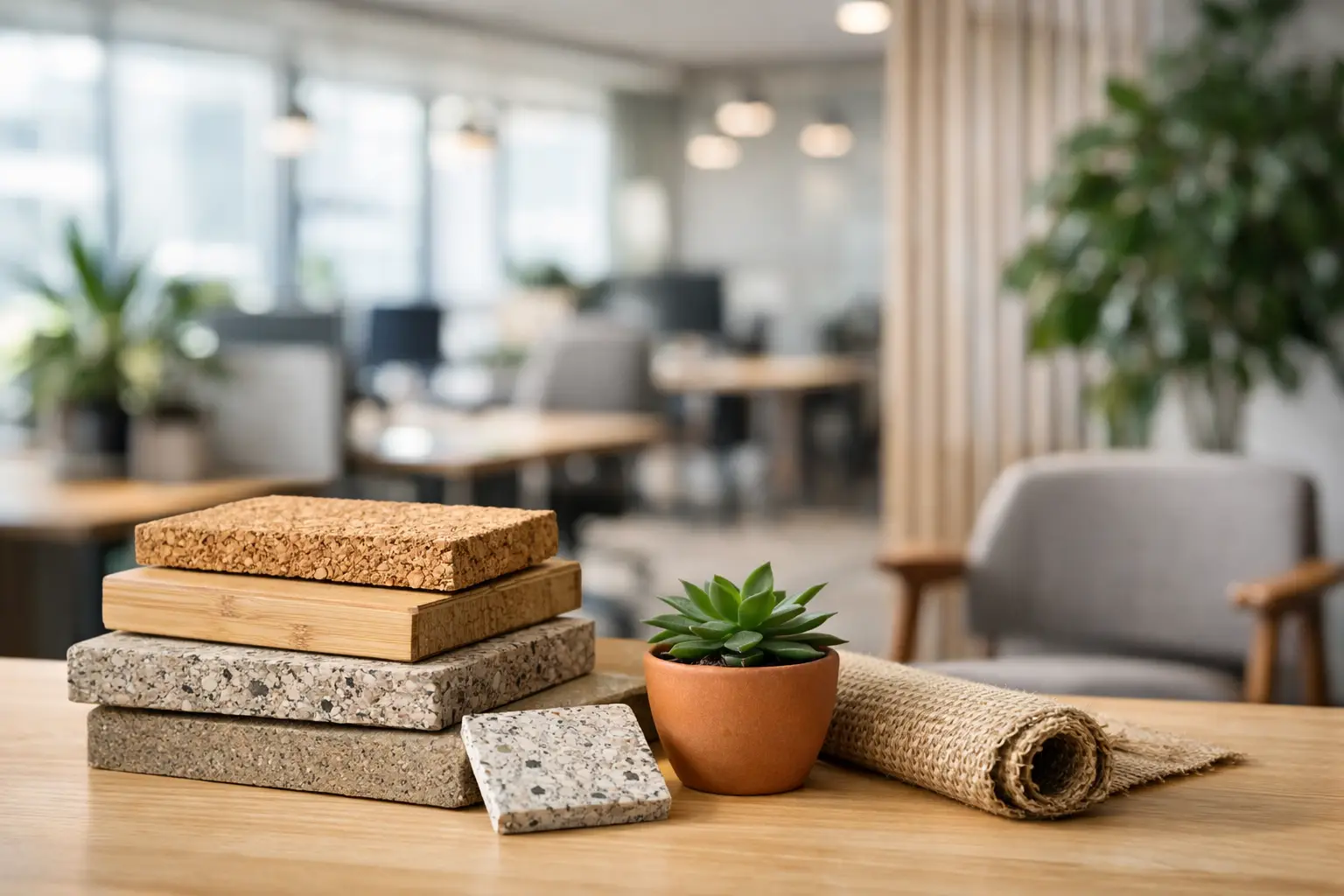
Material selection matters too. Timber, textured finishes and soft furnishings can add warmth and approachability. Glass, metal and crisp detailing can create a more precise, contemporary feel. Good branded design usually combines visual identity with durability. In a commercial environment, finishes need to look good after heavy daily use, not just on handover day.
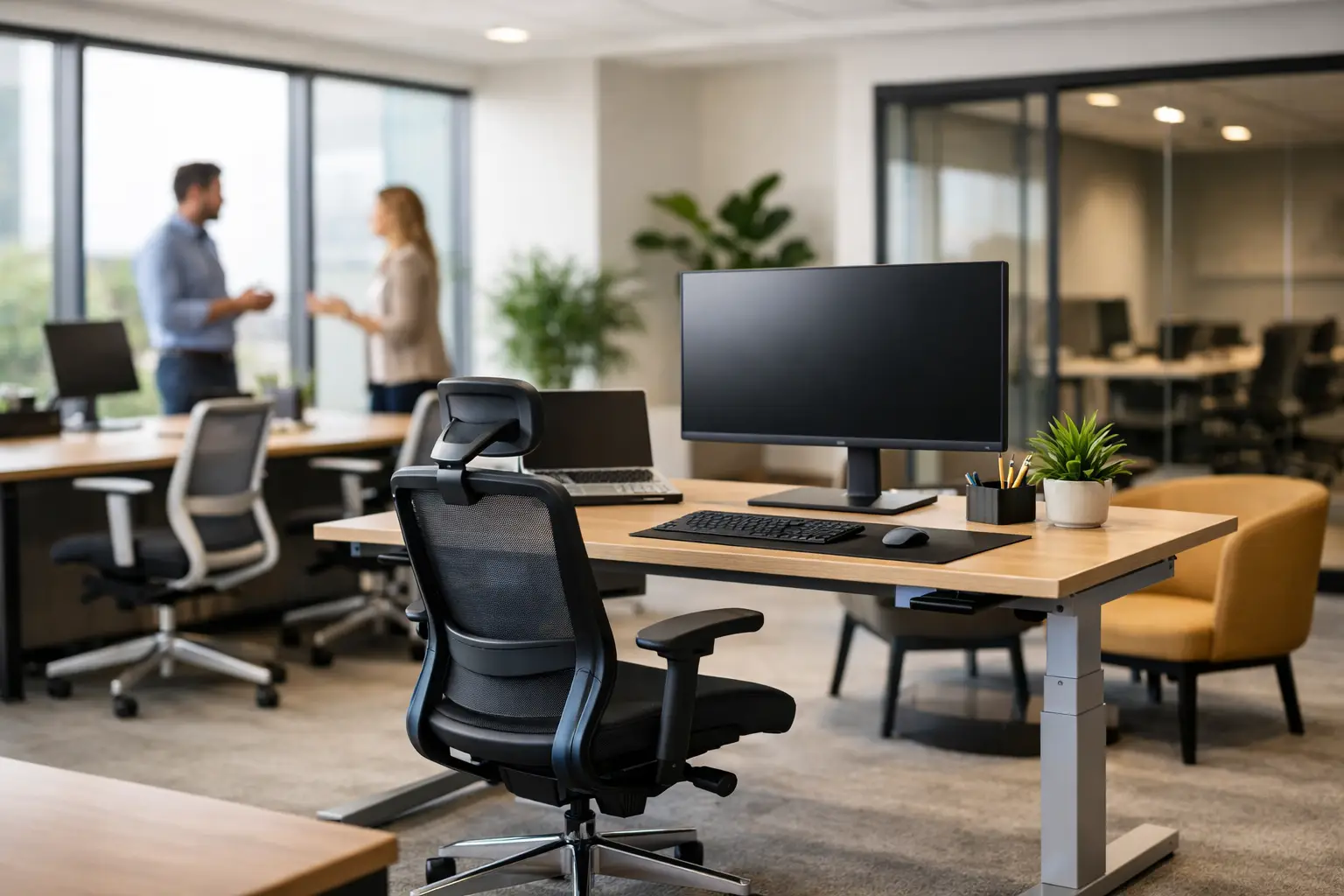
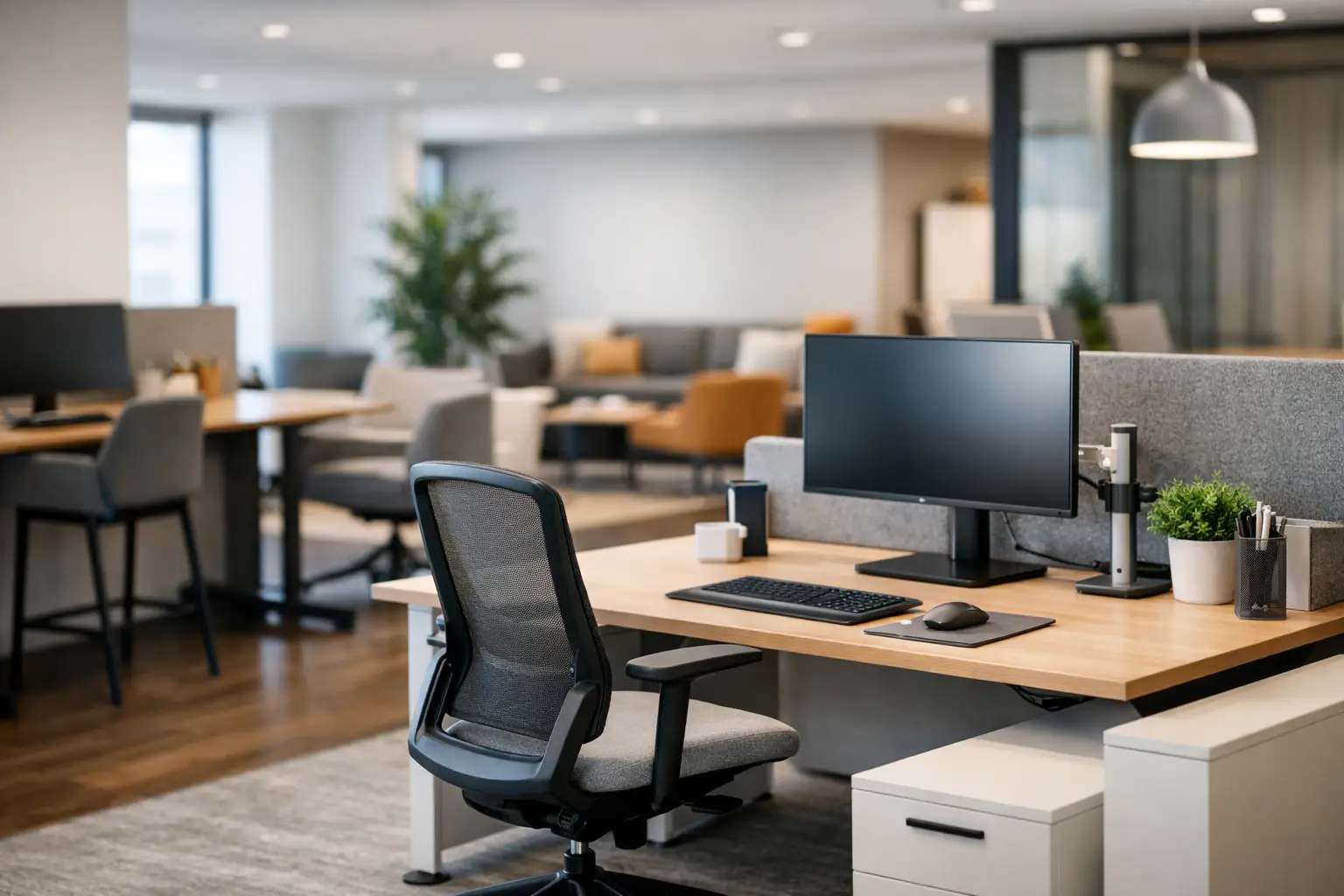
Furniture plays a bigger role than many businesses expect. Beyond appearance, it affects comfort, flexibility and how different zones are used. Reception furniture shapes first impressions. Meeting tables influence the tone of client interactions. Ergonomic task seating supports staff wellbeing and productivity. If the furniture feels like an afterthought, the brand experience often does too.
Graphics and signage are useful, but they work best with restraint. A logo in reception, wayfinding, environmental graphics or a values wall can all be effective. Overdo it and the workplace starts to feel forced. Most brands are better served by thoughtful integration than by repetition.
Lighting, acoustics and comfort are part of the brand
These are not always the most visible design features, but staff notice them quickly. Poor acoustics can make an office feel chaotic. Harsh lighting can make even a high-end fit-out feel uncomfortable. Inadequate air flow or temperature control affects concentration and morale.
If your business wants to present as professional, people-focused or high performing, these fundamentals cannot be ignored. A branded workplace should feel right as well as look right.
Where businesses often get it wrong
A common mistake is designing for leadership taste rather than broader business needs. Senior stakeholders absolutely need input, but branded environments work best when they reflect the organisation, not just a few personal preferences.
Another issue is treating branding and fit-out as separate decisions. When brand expression is bolted on at the end, it usually feels superficial. The strongest outcomes come when workplace strategy, interior design, furniture and finishes are considered together from the start.
Budget can also distort priorities. There is nothing wrong with working to a fixed figure. In fact, clear budget discipline usually leads to better decisions. The problem comes when money is spent on highly visible features while practical essentials are cut. If staff are uncomfortable, storage is inadequate or the layout does not support the business, expensive statement pieces will not rescue the result.
There is also a timing issue. Office refurbishments and relocations involve approvals, landlord requirements, services coordination and staged delivery. Businesses that leave decisions too late often end up compromising on details that matter. An experienced project partner helps avoid that pressure by coordinating the moving parts early and keeping the design intent intact through delivery.
Making branded design practical in real workplaces
For most organisations, the best answer is not the most extravagant one. It is the one that aligns with brand, people and operations in a way that can be delivered efficiently.
That may mean investing more in joinery and reception if client presentation is central to the business. It may mean focusing on flexible workpoints, meeting rooms and acoustic treatments if team collaboration is the priority. In some workplaces, branded impact comes from modest but well-chosen elements rather than a complete overhaul.
This is especially relevant for growing businesses, public sector organisations and teams managing live operational environments. The workplace still needs to function during planning and delivery. That is why practical staging, realistic budgets and accountable project management matter just as much as creative ideas.
Businesses across Melbourne often face these competing pressures at once: limited downtime, rising fit-out costs, the need to attract staff back to the office and pressure to make every square metre work harder. In that environment, branded workplace design has to do more than look impressive. It has to justify itself through performance.
A well-designed space can support recruitment, retention, efficiency and client confidence. It can also reduce friction by giving people clearer zones for focused work, meetings, collaboration and pause time. Those outcomes are not separate from branding. They are part of it.
If you are considering how to design branded workplace interiors for your organisation, the most useful question is simple: does the space reflect how your business wants to be experienced, every day, by the people who use it most? When the answer is yes, the office stops being just a backdrop. It starts doing its share of the work.