27 April 2026 · Integrity Office
A noisy office usually shows itself before anyone says a word. Teams start booking meeting rooms for solo work, phone calls move to stairwells, and the same question comes up in different forms – why is it so hard to concentrate here? Acoustic office partitions are often part of the answer, but only when they are chosen for the way people actually work, not just for how the floorplan looks on paper.
For many businesses, the issue is not whether the office is open plan. It is whether the space gives staff enough control over sound, privacy and interruption. That distinction matters. Open workplaces can work well, but they need acoustic balance. Partitions help create that balance by reducing sound transfer, breaking up direct noise paths and giving teams quieter zones without committing to full-height construction everywhere.
What acoustic office partitions really do
The first misconception is that acoustic office partitions “soundproof” a workplace. Most do not. In practical terms, they reduce noise rather than eliminate it. That is still valuable. A good partition can soften speech, absorb reverberation and make a space feel calmer, which often has a bigger day-to-day impact than people expect.
There are generally two acoustic jobs a partition can perform. One is sound absorption – taking the edge off reflected noise within a room. The other is sound blocking – limiting how much sound travels from one area to another. Some products do one better than the other. That is why a stylish screen that looks substantial may still do very little for speech privacy if it has been selected on appearance alone.
In busy offices, even a modest drop in perceived noise can improve comfort. Staff do not need silence. They need fewer distractions, less spill from nearby conversations and a workspace that supports different tasks across the day.
Where partitions make the biggest difference
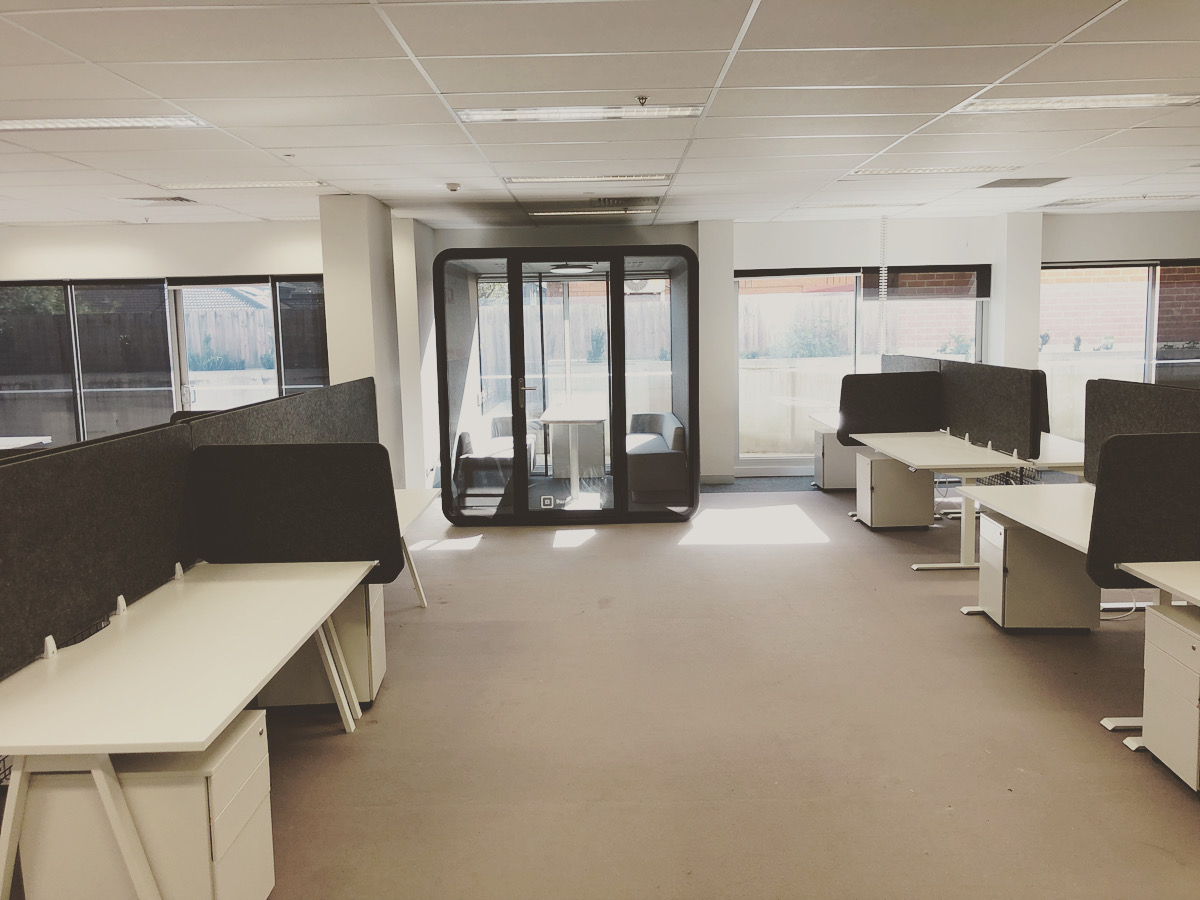
The best results usually come from placing partitions where noise is created or where concentration is most important. Workstation banks are the obvious example. Desk-mounted or mid-height freestanding partitions can reduce visual distraction and absorb some of the conversational noise that bounces around open plan areas.
Phone and collaboration zones are another strong use case. If informal meeting spots sit right beside focused work areas, the problem is not the meeting zone itself. It is the lack of acoustic separation. Partitions can create a buffer without closing the space off completely.
Reception areas, breakout spaces and multi-use rooms can also benefit. In these settings, acoustic partitions help define purpose. A space that feels slightly enclosed tends to be used more appropriately, whether that means quieter one-on-one conversations or more contained team catch-ups.
Choosing the right type of acoustic office partitions
There is no single best partition for every office. The right choice depends on layout, ceiling height, staff density, work patterns and whether the need is temporary or long term.
Desk partitions are useful when the main issue is immediate distraction between neighbouring workstations. They are relatively simple to introduce and can improve comfort quickly, but they will not solve noise travelling across a whole floor.
Freestanding partitions offer more flexibility. They can be moved as teams change, which makes them a practical option for organisations that are still refining how the space is used. They work well for separating touchdown areas, creating quiet zones or screening collaborative spaces. Their performance depends heavily on height, core material and placement.
Operable or demountable partition systems suit businesses that need stronger zoning without locking themselves into a permanent layout. These can be effective for dividing larger open areas, especially where adaptability matters. They require more planning, but they often provide a better balance between acoustic control and future flexibility.
Full-height glazed or solid partitions are sometimes the right move for meeting rooms, executive spaces or sensitive conversations. Here, the acoustic detail matters just as much as the wall itself. Gaps at the head, poor door seals and inconsistent finishes can undermine performance fast. On paper, the room looks private. In practice, everyone outside can still hear the conversation.
Materials matter more than most people realise
If acoustic performance is the priority, material selection should never be an afterthought. Fabric-wrapped panels, acoustic felt, perforated finishes and insulated cores all behave differently. A partition that simply creates a visual barrier may not meaningfully improve sound conditions.
Density, thickness and surface finish all play a role. Soft, porous materials tend to absorb sound better than hard reflective ones. That does not mean every partition should look padded or heavy. It means the product needs to be matched to the purpose.
This is also where design and function need to work together. In a client-facing office, partitions still need to support brand presentation and overall finish quality. The strongest outcomes come from integrating acoustics into the workspace design early, rather than trying to patch over noise issues once fit-out works are complete.
The trade-offs to think through
Acoustic gains usually come with choices elsewhere. Higher partitions can improve speech control, but they may reduce natural light and make a floor feel more closed in. More enclosed zones can support focused work, but too many barriers can work against collaboration.
There is also a cost question. Basic screens are easier on the budget, but if they do not address the real problem they can become an expensive compromise. On the other hand, going straight to full construction may be more than the workplace needs. Often the smartest investment sits between those two extremes.
Maintenance and longevity should be part of the conversation as well. In high-traffic workplaces, partitions need to stand up to regular use, cleaning and reconfiguration. A product that looks good at handover but shows wear quickly can affect both appearance and value over time.
Acoustic office partitions work best as part of a bigger plan
Noise problems are rarely caused by one thing, so they are rarely fixed by one thing. Acoustic office partitions are most effective when they sit within a broader workplace strategy that considers flooring, ceilings, furniture, room placement and staff movement.
For example, hard floors and exposed ceilings may look sharp, but they can also increase reverberation. If a workplace has lots of glazed surfaces and minimal soft furnishing, partitions may help, but they will be doing all the heavy lifting. A better result often comes from combining partitions with acoustic ceiling treatments, considered furniture choices and better zoning between quiet and active areas.
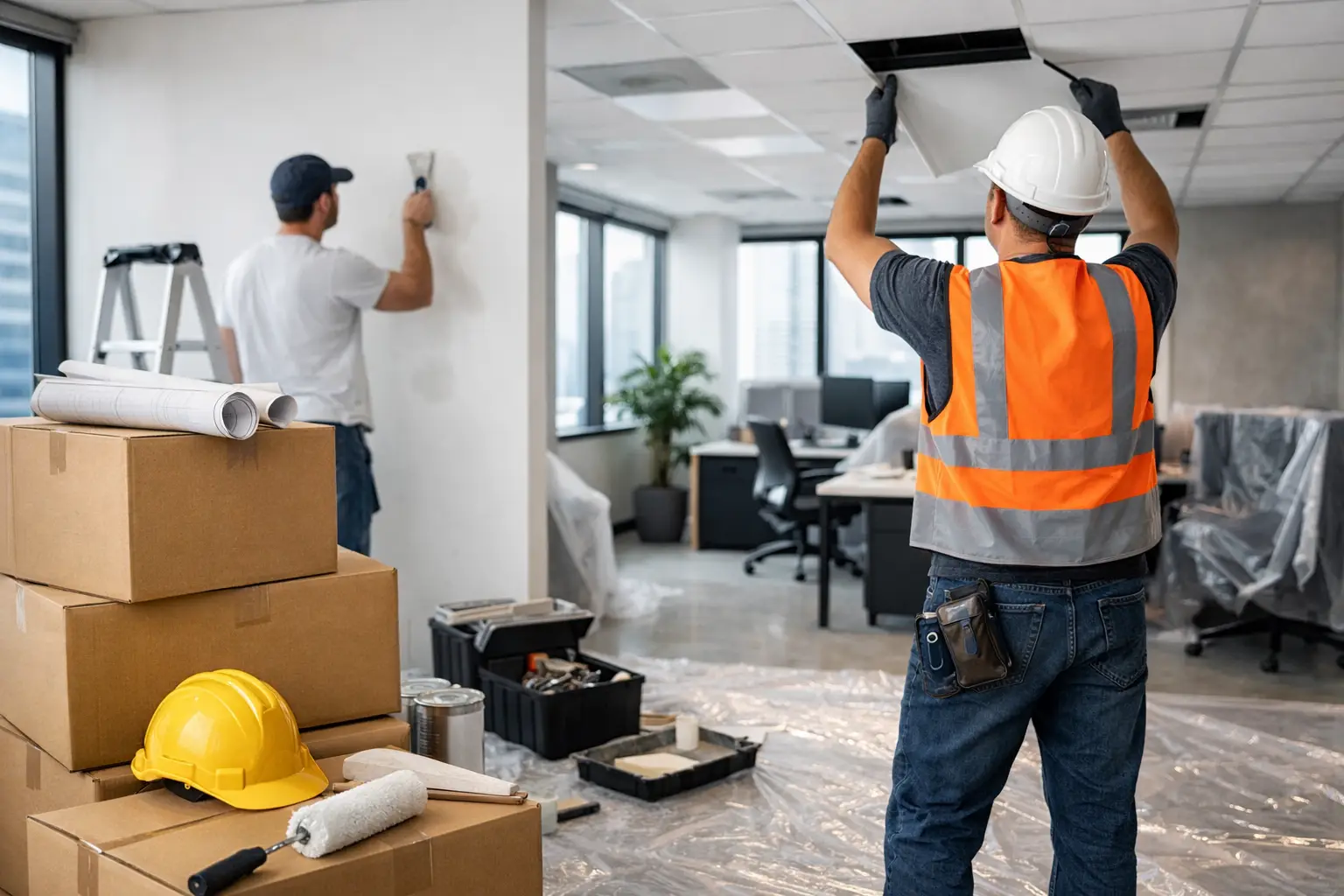
This is especially relevant during a refurbishment or fit-out. It is far easier to build acoustic performance into the layout from the start than to retrofit around avoidable planning decisions later. Businesses that take this broader view usually end up with spaces that not only sound better but function better.
What to ask before you buy
Before selecting any partition system, it helps to get clear on what success actually looks like. Is the goal to reduce general noise, improve privacy for calls, create flexible team areas or support concentrated work? Those are different problems, and they do not all need the same solution.
Ask how the product has been tested and what kind of acoustic result it is designed to deliver. Look at how it will integrate with existing furniture and circulation. Consider whether the office is likely to change in the next two to five years. A fixed answer to a temporary problem can become restrictive.
It is also worth checking whether installation will affect daily operations. For many organisations, the best solution is not just the one that performs well. It is the one that can be delivered with minimal disruption, clear timelines and confidence around cost. That is often where working with an experienced fit-out partner adds real value, because the acoustic outcome has to fit the project reality as well as the floorplan.
At Integrity Office, we see this often in Melbourne workplaces that have outgrown a layout which once seemed efficient. Teams are larger, hybrid work has changed how spaces are used, and what used to feel open now feels noisy. The answer is not always more walls. More often, it is smarter separation.
The most effective office changes are usually the ones staff notice in their day, not just on a drawing. If people can hear less, focus better and move through the space without stepping on each other, the workplace is doing its job properly.