
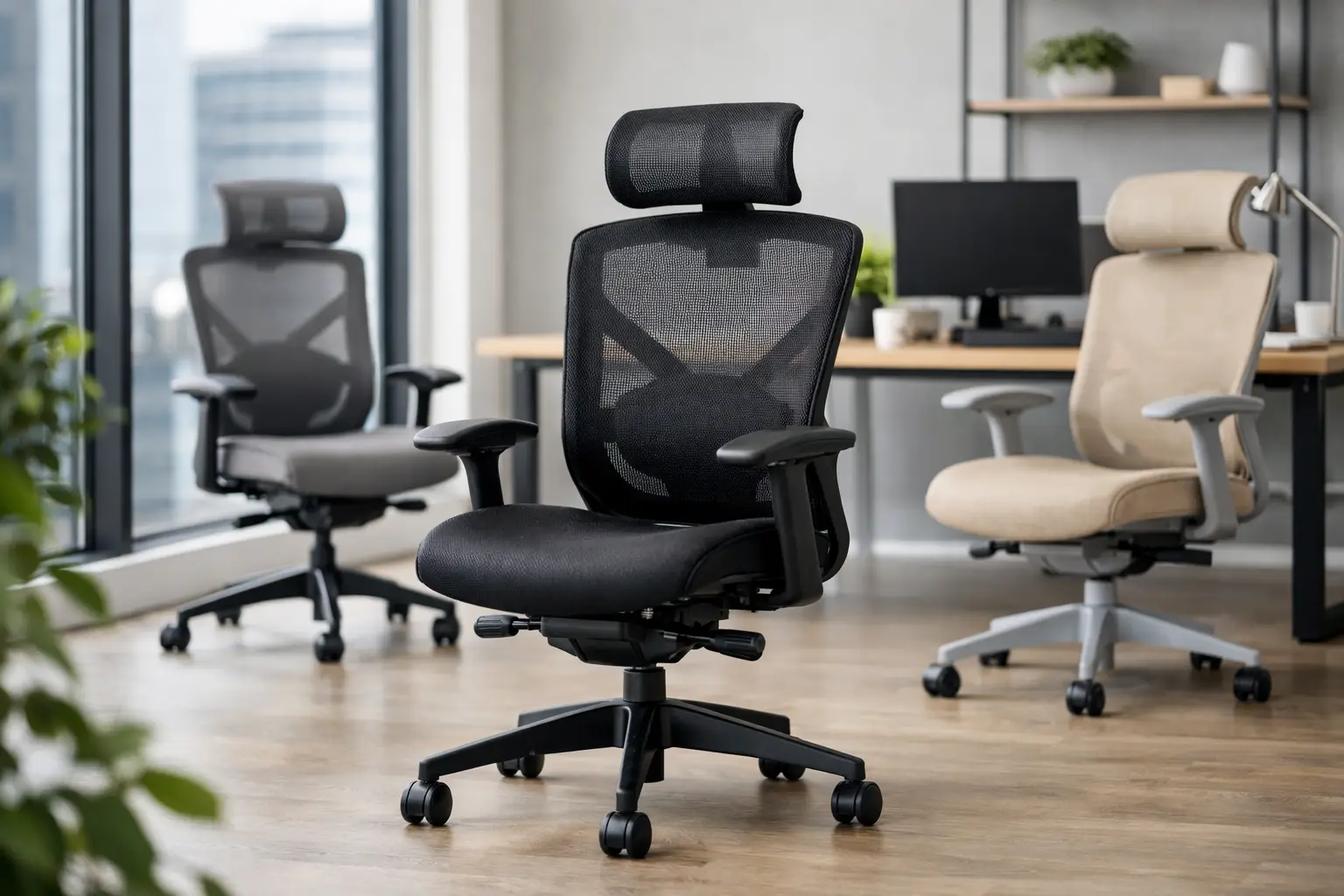
Best Ergonomic Chairs Australia for Offices
Melbourne office fitouts since 1985 3,500+ workplaces Fixed price 5.0 from 36 Google reviews
A chair can look impressive in a showroom and still be a poor fit by Friday afternoon. That is usually the point when businesses start asking a more useful question – not which chair is trendy, but which are the best ergonomic chairs Australian workplaces can rely on day after day.
For office managers, HR leaders and business owners, the decision is rarely about one person’s preference. It affects comfort, productivity, workers’ compensation risk, replacement cycles and how well a workplace supports different body types and work styles. In a commercial setting, the right chair needs to do more than feel good for ten minutes. It needs to perform over years of daily use.
What makes the best ergonomic chairs Australian buyers should consider?
The best ergonomic chair is not simply the one with the most levers or the highest price tag. Good ergonomic seating is about adjustability, support and suitability for the job being done.
A quality ergonomic chair should allow the user to sit with feet supported, thighs roughly parallel to the floor and arms relaxed at the desk. That sounds basic, but it immediately rules out many chairs that are either too fixed, too flimsy or too limited in sizing. In shared office environments, flexibility matters even more because one chair may be used by several people across a week.
Back support is usually the first feature people notice, but seat depth, lumbar adjustment, armrest position and tilt movement are just as important. If the seat is too deep, shorter users cannot sit back properly. If the armrests are too high, shoulders stay tense. If the recline is awkward, people stop using it altogether.
The best ergonomic chairs Australian businesses invest in tend to get the fundamentals right before adding extras. That means stable construction, intuitive adjustment and materials that hold up in commercial use.
Start with how the chair will be used
Before comparing brands or finishes, it helps to define the setting. A task chair for a finance team working at desks all day has different requirements from seating in a meeting room, reception area or touchdown zone.
For full-time workstation use, ergonomic performance should be the priority. Users need a chair that encourages movement, supports upright work and remains comfortable across long periods. In these cases, a synchronised tilt, adjustable lumbar support and seat slide are often worthwhile.
In hybrid environments, the picture changes slightly. If staff are hot-desking and no one uses the same chair every day, intuitive controls become more important than highly specialised adjustment. A chair can be technically excellent and still fail in practice if nobody understands how to set it up.
There is also a practical budget question. Not every workstation needs the most premium chair in the range, but the cheapest option often becomes expensive when failures, complaints and replacements start stacking up. Commercial furniture should be assessed over its service life, not just its purchase price.
Features worth paying for, and features that are often oversold
There are some features that genuinely improve fit and usability. Seat height adjustment is non-negotiable. Lumbar support, whether built in or adjustable, is also important for most users. A good tilt mechanism helps reduce static postures and supports movement during the day.
Adjustable armrests can be valuable, especially in task-based roles, but only when they adjust properly and do not interfere with desk access. Seat depth adjustment is another feature that often makes a real difference in diverse teams because it helps accommodate both shorter and taller users.
By contrast, some features sound impressive but add little value in many workplaces. Headrests are a common example. They can be useful in some executive or reclined working styles, but for most desk-based task seating they are not essential. Similarly, highly complex controls are not automatically better. If staff do not use them, they do not deliver ergonomic value.
Mesh backs versus upholstered backs are another area where preference gets confused with performance. Mesh can feel cooler and lighter visually, while upholstered backs often provide a different kind of comfort and support. Neither is universally better. It depends on the chair design, the user and the workplace environment.
Why one-size-fits-all rarely works
This is where many businesses get caught. They order a single chair model for the entire office assuming standardisation will make procurement easier. It can, but only up to a point.
Workforces are varied. Heights, weights, medical needs and job demands differ from person to person. A single chair range may still work well if it offers sufficient adjustment and the right sizing options, but there are times when a mixed seating strategy is the smarter choice.
For example, general workstations might use one core ergonomic task chair, while users with specific postural needs require an alternative model with greater adjustment or weight-rated support. Executive offices may prefer a chair with a more refined finish, provided it still delivers proper ergonomic function. Training rooms and meeting spaces need a different balance again, often favouring mobility and stackability over deep individual adjustment.
The goal is consistency where it helps, not uniformity for its own sake.
How to assess an ergonomic chair in real terms
A product brochure will tell you what a chair includes. It will not tell you how well it performs in your workplace. That usually comes down to testing, specification review and supplier guidance.
When assessing chairs, look at how easily the controls can be reached and understood. Check whether the chair supports upright sitting without forcing it. Notice whether the backrest follows movement smoothly or feels resistant. Pay attention to the seat foam and edge profile, because discomfort often starts there before users can explain what feels wrong.
Commercial warranty is another strong indicator. A chair with a serious warranty backed for commercial use generally reflects greater confidence in its build quality. That does not guarantee suitability, but it does help separate furniture designed for real workplaces from furniture designed mainly for occasional home use.
It is also worth asking practical questions about parts, lead times and continuity of supply. If you are furnishing an office in stages, you do not want a chair range discontinued halfway through the rollout. Businesses benefit from solutions that can scale with growth and remain consistent over time.
The hidden cost of getting it wrong
Poor seating decisions rarely fail all at once. More often, the signs appear gradually – discomfort complaints, improvised cushions, staff swapping chairs, early wear, maintenance issues and a steady stream of replacement requests.
There is also a wider workplace impact. Seating that does not properly support users can contribute to fatigue, distraction and avoidable strain. For employers, that means the conversation is not only about furniture. It is about wellbeing, consistency and how the physical environment supports performance.
This is especially relevant during relocations, refurbishments and fit-outs. Ergonomic seating should not be treated as an afterthought once the workstations are in. Chair selection works best when considered alongside desk heights, monitor setups, storage access and the overall way teams use the space.
That broader view is where experienced workplace partners add value. A chair does not exist in isolation. It is one part of a functioning office environment.
Choosing a supplier, not just a chair
Businesses often focus heavily on product comparison and not enough on who is supplying it. That can be a mistake, especially for larger orders or project-based workplace changes.
A good supplier should help narrow options based on user needs, budget and intended use rather than simply pushing the highest-margin model. They should be able to explain the trade-offs clearly. For instance, one chair may offer stronger adjustment for intensive daily use, while another may suit a mixed-use office better because it is simpler to operate and faster to deploy at scale.
For organisations planning a broader office upgrade, it also helps to work with a partner who understands how furniture decisions connect with layout, workflow and long-term maintenance. At Integrity Office, that practical coordination is often what makes procurement easier for clients. Instead of treating seating as a standalone purchase, it becomes part of a workplace solution that is designed to perform properly from day one.
So what should most businesses prioritise?
If you are narrowing the field, focus first on fit, adjustment and durability. After that, look at ease of use, warranty and visual suitability for your space. A chair should support your people well, but it should also make sense for your environment, whether that is a corporate office, education setting, healthcare administration space or government workplace.
The best choice is not always the most expensive chair, and it is not always the one with the longest feature list. Usually, it is the one that suits the greatest number of users, stands up to commercial use and can be specified with confidence.
A well-chosen ergonomic chair does something quite simple. It stops being noticed. Staff are not shifting all day, facilities teams are not fielding constant complaints, and the workplace feels considered rather than patched together. That is usually the clearest sign you chose well.