22 April 2026 · Integrity Office
A chair that looks good in a showroom can become a daily complaint once it is rolled out across a real office. That is why the ergonomic office chairs Australian businesses choose need to do more than tick a style box. They need to support different bodies, suit the way teams actually work, and stand up to years of use without creating a maintenance headache.
For office managers, HR teams and operations leaders, seating decisions rarely sit in isolation. They affect wellbeing, productivity, space planning, budgets and, in some settings, workplace health and safety obligations. A cheaper chair can look like a saving on paper, but if it wears quickly, causes discomfort or leads to replacement cycles every couple of years, the real cost shows up elsewhere.
Why ergonomic office chairs in Australia need a practical lens
The Australian market is broad. There are task chairs for high-volume workstations, executive styles for private offices, visitor seating with limited adjustment, and specialist options for intensive use environments. The challenge is not a lack of choice. It is sorting through features that matter and filtering out those that add cost without adding much value.
In most workplaces, the best result comes from matching the chair to the task, not choosing one model for every space because it simplifies procurement. A finance team working long hours at fixed desks has different needs from a collaborative project area where people move in and out throughout the day. The right chair in one setting may be the wrong investment in another.
That is also why a trial or mock-up phase often pays off. On paper, two chairs can seem nearly identical. In use, one may offer better lumbar support, more intuitive controls or a seat shape that suits a wider range of staff.
What to look for in ergonomic office chairs Australia-wide
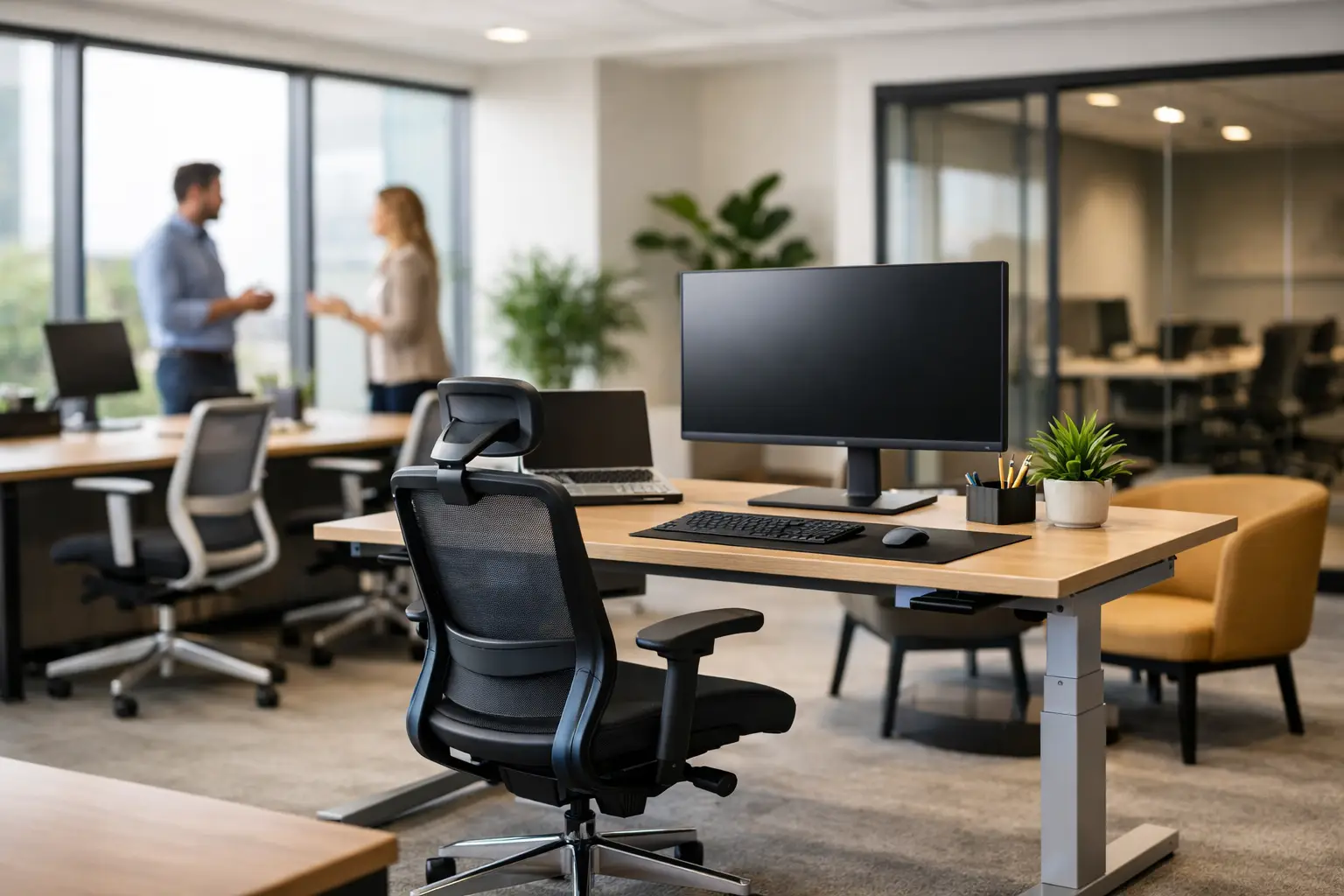
Adjustment is the first place to look, but not every adjustment carries equal value. Seat height is essential. Back support that can be tuned to the user is equally important. A quality ergonomic chair should make it easy for staff to sit with feet supported, hips level and the lower back properly supported without fiddling with awkward levers.
Seat depth matters more than many buyers expect. If the seat is too long, shorter users end up perching forward and losing back support. If it is too short, taller users can feel under-supported through the thighs. The more diverse your team, the more important this becomes.
Armrests are another area where trade-offs matter. Adjustable armrests can reduce shoulder strain for some users, particularly those who spend long periods keyboarding. But in tightly planned workstation layouts, oversized armrests can interfere with desk access. In some environments, simple height-adjustable arms are more practical than highly engineered multi-directional ones.
The mechanism also deserves attention. Sync and tilt functions can support movement during the day, which is generally better than holding one static position for hours. But the controls need to be intuitive. If staff do not understand how to adjust the chair, those features may never be used.
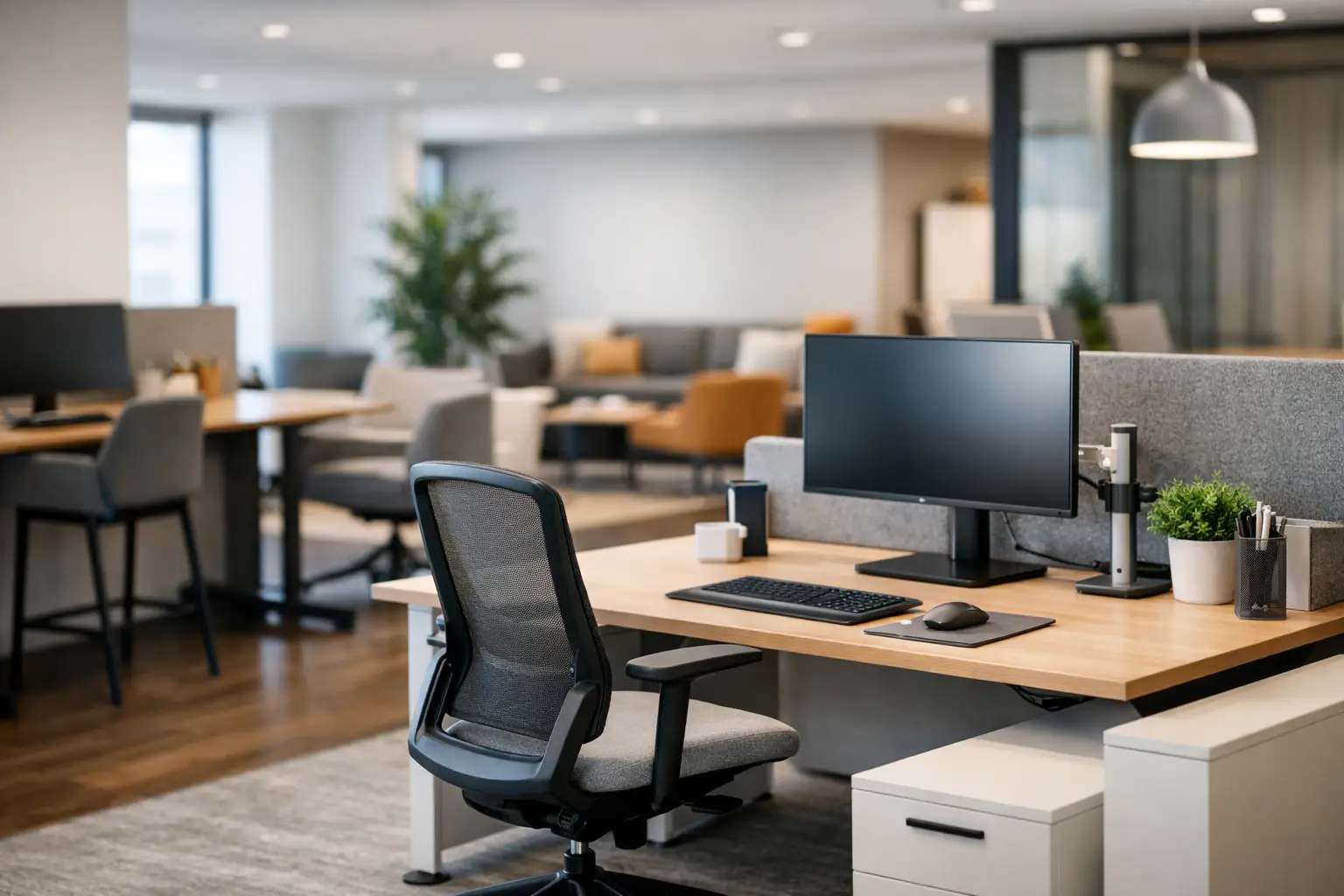
Breathable mesh backs are popular for good reason, particularly in warmer offices or fit-outs with dense occupancy. They can improve airflow and create a lighter visual feel. That said, upholstered backs may provide a different kind of comfort and can sometimes align better with a more formal interior. There is no universal winner here. It depends on the workspace and the people using it.
The business case for better seating
Ergonomic seating is often framed as a comfort issue, but business decision-makers usually need a broader lens. Staff who are distracted by discomfort are not working at their best. Chairs that cannot be adjusted for different users are a poor fit for hybrid environments, hot-desking arrangements and growing teams. Seating that breaks down early creates disruption as well as cost.
There is also a culture piece. Employees notice when workplaces are fitted out with furniture that feels considered rather than purely economical. A well-selected chair signals that the business has thought seriously about daily working conditions. That matters in staff retention, onboarding and the overall experience of coming into the office.
For organisations investing in a new fit-out or refurbishment, seating should be assessed as part of the wider workplace strategy. Desk height, monitor setup, storage placement and circulation space all influence whether a chair performs properly. Good ergonomic outcomes come from the whole workstation, not from one product chosen in isolation.
Common buying mistakes
One of the biggest mistakes is buying purely on unit price. That can be understandable when budgets are under pressure, especially across a large office. But low-cost seating often comes with compromises in foam density, mechanism quality, fabric durability and warranty coverage. Those issues are not always obvious at the point of purchase.
Another mistake is choosing based on the preferences of a small decision group rather than the broader user base. A senior manager may love a heavily padded executive chair, but that does not mean it is the right standard for a team of 40 working at screens all day.
A third common issue is underestimating how hard commercial environments are on furniture. In a busy office, chairs are adjusted constantly, moved between desks, leaned on, wheeled across different floor finishes and used by people of different sizes. Residential-grade or light-duty products often do not last in that setting.
Finally, some businesses buy chairs late in the project, after desks and floorplans are already locked in. That can create avoidable issues with desk clearance, movement zones and consistency across the workplace. Seating choices are easier and usually more effective when made alongside the wider furniture plan.
How to assess ergonomic office chairs for your workplace
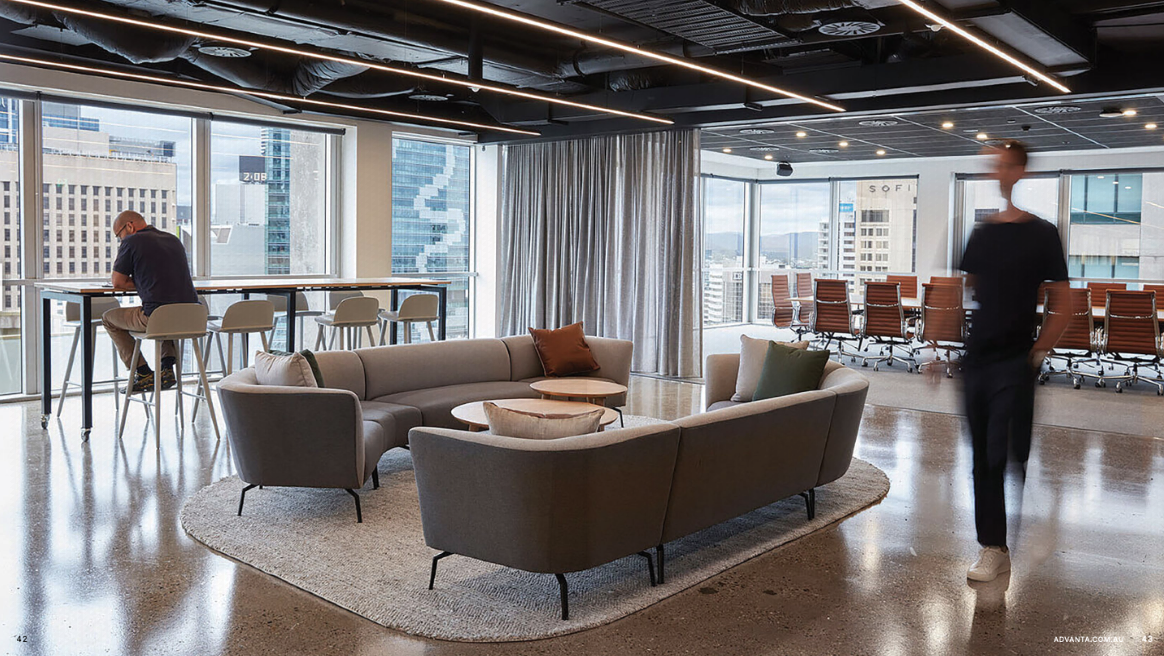
Start with how the space is actually used. If most staff are desk-based for long stretches, invest in stronger ergonomic performance at the workstation level. If the office uses a mix of touchdown spaces, meeting rooms and shared desks, a more layered furniture approach may make sense.
Think about user range. In many offices, one chair may need to suit multiple people across a week. That makes simple adjustment, broad fit and durable mechanisms especially important. A chair that only feels right for a narrow band of users can create frustration quickly.
Look closely at warranty terms, lead times and after-sales support. These are practical details, but they matter. If a component fails, can it be repaired? If you need to add matching chairs later, will the product still be available? A dependable furniture programme is not just about the initial order.
It is also worth considering the visual impact. Chairs occupy a lot of visual space in an office. They should support the brand and feel of the environment without overpowering it. In a client-facing workplace, that balance between ergonomic function and presentation becomes even more important.
For many organisations, the best outcomes come from working with a supplier or fit-out partner who can assess the space, the workstyles and the budget together. That avoids the common problem of treating seating as a disconnected purchase. Integrity Office often sees stronger long-term value when furniture selection is integrated into the wider workplace plan rather than left as a final procurement task.
When one chair is enough – and when it is not
There are situations where standardising on one ergonomic chair works well. If your office has mostly uniform workstations, a relatively consistent staff profile and a clear need for procurement simplicity, one core chair can be efficient and easy to maintain.
But many businesses are better served by a small family of seating options. A primary task chair for focused desk work, a lighter chair for shared areas, and a visitor or meeting chair for shorter use periods can produce a better balance of comfort, cost and design consistency. It may seem more complex initially, yet it often leads to a more functional office.
The key is not to overcomplicate it. Most workplaces do not need dozens of seating types. They do need a thoughtful selection process and a clear understanding of what each area is meant to support.
A good office chair does its job quietly. It supports people without demanding attention, fits the space without fighting it, and keeps performing long after the fit-out is finished. That is usually the right benchmark – not the flashiest option in the catalogue, but the one that makes work easier every day.