
A desk that nobody adjusts is just an expensive fixed-height desk with extra parts. That is the real test when businesses start looking at sit stand desks for offices – not whether they look modern in a showroom, but whether people will actually use them well, every day, without slowing down the work around them.
For office managers, operations leaders and business owners, that makes the decision more practical than trendy. A sit stand setup can support comfort, movement and flexibility across a team, but only if it suits the way your workplace runs. The right choice depends on your people, your floor plan, your technology, your budget and the standard of finish you expect across the office.
Why sit stand desks for offices keep coming up
Most workplaces are trying to solve more than one problem at once. They want better ergonomics, stronger staff experience, efficient use of space and furniture that will last through team changes. Sit stand desks appeal because they touch all of those areas.
At a user level, the benefit is straightforward. People can change posture during the day instead of staying fixed in one position for hours. That can help reduce the stiffness that often builds up through the back, neck and shoulders, especially in desk-heavy roles. For some teams, it also creates a stronger sense of autonomy. Staff can set their workstation to suit their height and preferences rather than trying to adapt themselves to a desk that never changes.
At a workplace level, these desks are often a good fit for offices moving towards more flexible, employee-focused environments. They signal that comfort and wellbeing have been considered as part of the fit-out, not tacked on later. That matters for staff retention and workplace perception, but it also matters operationally. If you are upgrading furniture anyway, it makes sense to assess whether adjustability will add long-term value.
Not every office needs the same desk
This is where many furniture decisions become harder than they first appear. Two offices can both want sit stand desks and still need completely different solutions.
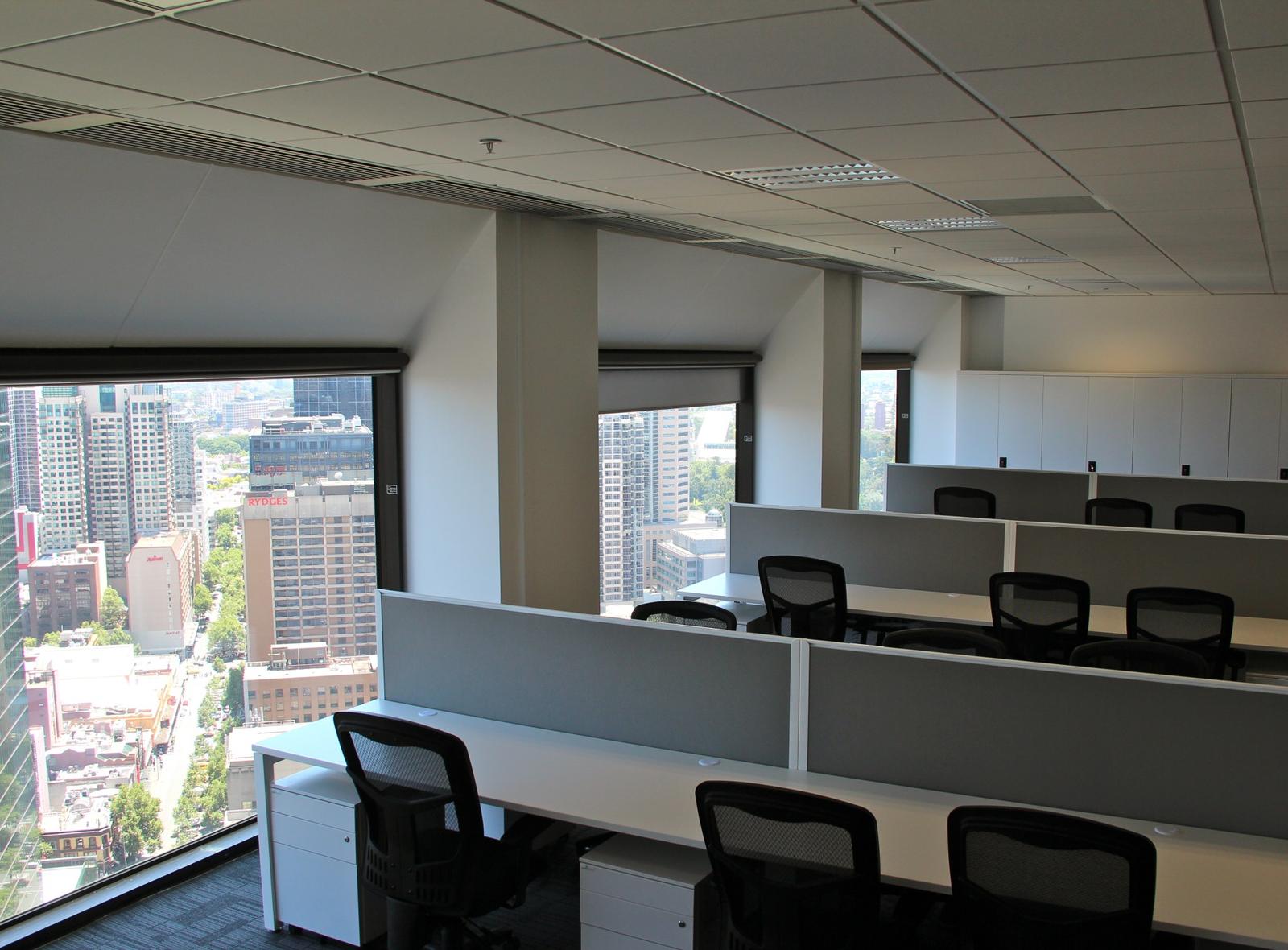
A finance team working with dual screens, docking stations and paper files will usually need a larger, more stable workstation with careful cable management. A sales team in a lighter-touch setup may be better suited to a more compact desk footprint. In leadership areas or client-facing spaces, aesthetics may carry more weight because the furniture has to support the overall look and feel of the office, not just the function.
There is also a difference between assigning sit stand desks to every employee and introducing them selectively. For some businesses, a full rollout makes sense because consistency matters and everyone performs similar work. In other cases, it is more practical to prioritise staff with specific ergonomic needs, high screen time or task profiles that benefit most from adjustability.
That is why the best decision is rarely about choosing the most feature-rich desk. It is about matching the specification to the real conditions of the workplace.
What matters when choosing sit stand desks for offices
Height range is one of the first things to check. A desk should comfortably accommodate the people who will use it, both sitting and standing. If the adjustment range is too limited, some users will never achieve a proper ergonomic position.
Stability matters just as much. When desks are raised, lower-quality frames can wobble, particularly with dual monitors or monitor arms. That movement is distracting and often leads to users abandoning the standing function altogether. In a busy office, reliability is not a bonus – it is essential.
Motor quality and noise levels are also worth attention. In open-plan environments, desks that operate loudly can become an irritation very quickly. Smooth, quiet adjustment makes a noticeable difference to daily use, especially across larger teams.
Then there is cable management, which is often underestimated. Sit stand desks move, so the power and data setup has to move cleanly with them. If cables dangle, snag or clutter the underside of the desk, the workstation will never feel tidy or fully resolved. This is particularly important in well-designed offices where visual consistency and safety both matter.
Desktop size and shape should reflect actual work patterns. A desk that looks generous on plan can feel cramped once screens, laptops, keyboards and personal items are in place. On the other hand, oversized desks can waste valuable floor space and reduce circulation if the office footprint is tight.
The trade-offs are real
Sit stand desks are not automatically the right choice in every situation. They usually cost more than fixed-height desks, and across a large office the budget difference can be significant. That does not mean they are poor value. It simply means the return needs to be considered properly.
There is also a behavioural side to the decision. Some staff will embrace the option immediately. Others may barely use it without guidance or encouragement. If the desks are introduced as part of a broader workplace improvement strategy, with some thought given to ergonomic education and setup support, adoption is generally better. If they are installed without any context, usage can be patchy.
Space planning can become more complex too. Movement zones, adjacent furniture, privacy screens and monitor arms all need to work together. A sit stand desk does not exist in isolation. It has to integrate with the workstation setting around it.
None of these issues are deal-breakers. They just reinforce the point that furniture should be selected as part of the workplace as a whole, not as a stand-alone product decision.
Integration matters more than the desk itself
One of the most common mistakes in office upgrades is treating furniture selection as the final step. In reality, desk performance depends heavily on how early it is considered in the planning process.
If sit stand desks are part of a refurbishment, relocation or new fit-out, they should be assessed alongside power access, storage, acoustic treatments, screen placement and circulation. That helps avoid compromises later, such as awkward cable runs, cramped leg zones or workstation clusters that feel too tight once desks are raised.
This is especially relevant in commercial environments where consistency, compliance and delivery timing matter. A desk may be suitable on its own, but still create challenges when multiplied across 30, 50 or 100 workpoints. Experienced planning reduces those risks because the furniture, services and layout are being resolved together.
For businesses managing a broader workplace change, there is value in having one team coordinate these details rather than splitting responsibility between multiple suppliers. Integrity Office often works with clients this way, helping ensure the furniture choice supports the fit-out rather than becoming a separate problem to solve mid-project.
Where sit stand desks make the most sense
They tend to work well in professional services, corporate offices, government settings and administrative environments where staff spend long periods at screens. They are also useful in workplaces trying to standardise ergonomic support across teams with varied heights and roles.
They can be particularly effective in hybrid offices. When people are not in the office every day, the workstation needs to be quick to adjust and comfortable to use. A desk that suits multiple users can make shared environments feel more practical and considered.
That said, some workplaces may be better served by a mixed approach. Fixed-height desks in low-use areas, executive spaces or touchdown zones might still be perfectly appropriate, while sit stand desks are reserved for core workstations. Good planning is not about applying one answer everywhere. It is about allocating budget where it has the strongest impact.
Getting the rollout right
If you are considering sit stand desks, start with the operational questions rather than the catalogue. Who will use them? What equipment sits on each desk? How much space is available? What level of finish is expected? Are you replacing furniture only, or coordinating with a larger office project?
A pilot area can be useful for some businesses, particularly if there is uncertainty around adoption or specification. It allows you to test desk size, monitor setup, storage needs and user behaviour before committing to a wider rollout. In other cases, especially where an office fit-out is already being planned, it is more efficient to decide early and integrate the desks from the outset.
It is also worth thinking about after-installation support. Even a well-chosen desk will underperform if staff are unsure how to set it up correctly. Simple guidance around sitting height, standing height, screen position and movement through the day can improve both comfort and uptake.
The best outcomes usually come from a balance of product quality, practical planning and realistic expectations. Sit stand desks can add genuine value to an office, but they are most effective when selected with the same care as the rest of the workspace.
A well-designed office should make good work easier. If a sit stand desk helps people stay comfortable, focused and adaptable through the day, it is doing far more than changing height – it is supporting the way your business operates.
Next step
Find out what your fitout costs.
One team for design, construction, joinery and furniture. One contract, one fixed price, and one person to hold us to it.