26 April 2026 · Integrity Office
The front desk tells people what to expect before anyone says a word. If the area feels cramped, confusing or out of step with your business, visitors notice it straight away. Good office reception desk design is not just about appearance. It affects how people check in, how staff work, how secure the space feels and whether the entry experience reflects your brand.
For many businesses, the reception desk has to do several jobs at once. It needs to welcome clients, support admin tasks, manage deliveries, provide a clear point of contact and often create a sense of order in a busy entry. That means the best design decisions are rarely about picking a desk that looks impressive in a showroom. They come from understanding how the space is used every day.
What good office reception desk design needs to solve
A reception desk sits at the meeting point between brand and operations. It has to look right, but it also has to work hard. In practical terms, that means balancing presentation with circulation, privacy, accessibility and durability.
A sleek desk with a tiny work surface may photograph well, but it can quickly become frustrating for reception staff managing mobiles, sign-ins, mail and visitor queries. On the other hand, an oversized counter can dominate the entry and make the whole office feel closed off. The right solution usually sits somewhere in between, shaped by the size of the foyer, visitor volume and the level of support the reception team actually needs.
This is where many projects benefit from a broader workplace view. The desk should not be treated as a standalone piece of furniture. It needs to be considered alongside entry flow, waiting areas, security measures, joinery finishes, lighting and sightlines into the rest of the office.
Start with function, not just form
Before selecting materials or styling, it helps to define what happens at reception each day. A law firm with frequent client visits has different needs from a warehouse office that mostly receives couriers. A healthcare setting will have privacy requirements that a creative agency may not. A corporate office in Melbourne’s CBD may need a stronger focus on visitor management and access control than a smaller suburban tenancy.
The desk design should respond to those realities. If the receptionist spends most of the day seated, ergonomics matter. If multiple team members share the desk, zoning becomes important. If visitors often complete forms or wait for assistance, the counter height and surrounding space need careful thought.
An effective brief usually covers a few practical questions. How many people will work there? What technology needs to be integrated? Will there be printers, storage, lockers or concealed cable access? Does the team need a standing transaction point as well as a seated workstation? These details shape the final result far more than trends do.
Getting the size and layout right
A common mistake is choosing a desk based on visual impact alone. Bigger is not always better. In a smaller tenancy, a heavy reception counter can reduce usable floor area and make the entry feel tight. In a larger space, a desk that is too small can look temporary or underdone.
The layout should allow people to approach naturally without blocking walkways. There should be enough space for wheelchairs, prams and deliveries to move through comfortably. Staff also need safe and efficient access behind the desk, especially if the area handles frequent foot traffic.
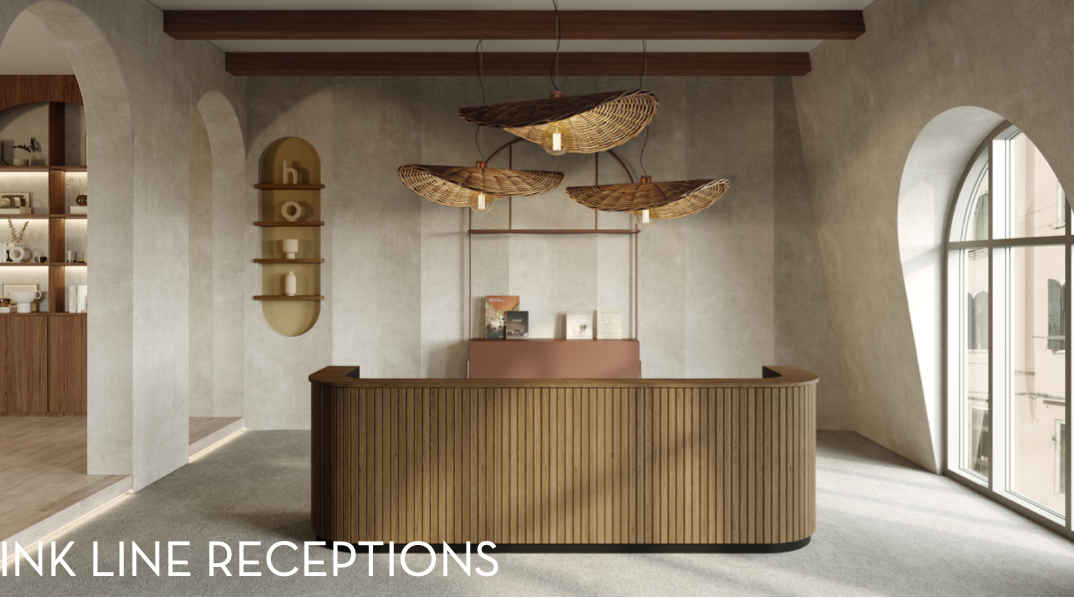
Curved desks can soften the entry and improve visitor flow, but they are not always the best use of space. Linear designs are often easier to plan around and can provide more efficient storage and work surfaces. Neither is automatically better. It depends on the footprint, the brand style and how the area operates.
Accessibility is not optional
Inclusive office reception desk design should be part of the plan from the beginning, not added later as a compromise. A reception area needs to work for all visitors, including people with mobility limitations, hearing challenges or vision impairments.
That usually means including an accessible counter section at an appropriate height, ensuring clear circulation space and avoiding design choices that create confusion or barriers. Lighting also plays a part. A dramatic feature light may look striking, but if it throws glare across the counter or leaves staff in shadow, it can make interactions more difficult.
For many organisations, accessibility is also closely tied to professionalism. When the entry experience is easy to navigate, it signals that the business is organised, considerate and ready to receive people properly.
Brand presence without overdoing it
Reception is one of the strongest opportunities to express brand identity, but restraint matters. A desk should feel aligned with the business, not overwhelmed by logos, finishes or gimmicks that date quickly.
Material selection does a lot of this work. Timber tones can add warmth. Stone or stone-look surfaces can create a more premium feel. Powdercoated metal details can sharpen a contemporary fit-out. Upholstered feature panels can soften acoustics and add texture. The right mix depends on the broader interior palette and the message the business wants to send.
There is also a difference between brand recognition and brand repetition. Visitors do not need every brand element concentrated at the front door. Often, a well-crafted desk, quality finishes and a consistent design language say more than oversized signage ever could.
Storage, cables and the things people should not see
A tidy reception area rarely happens by accident. It is usually the result of good joinery planning. Hidden storage for stationery, deliveries, bags and personal items makes a visible difference. So does thoughtful cable management.
This part of the design is easy to overlook early, then expensive to fix later. If the desk needs power, data, screens, EFTPOS terminals, mobiles or charging points, those services should be integrated cleanly. Exposed leads and cluttered benchtops can undermine an otherwise polished fit-out.
Privacy matters too. In some sectors, paperwork and screens should not be visible to people standing at the counter. Modesty panels, raised transaction counters and monitor positioning can all help protect sensitive information without making the space feel closed off.
Materials need to handle real use
Reception desks are high-touch surfaces. Bags get dragged across them, coffee cups are put down, parcels are dropped, pens go missing and edges take knocks. That is why office reception desk design should always consider durability as seriously as visual appeal.
Some finishes look excellent on day one but show wear quickly. High-gloss surfaces can scratch. Softer laminates may mark in busy environments. Stone can create impact, but it also adds weight and cost. Timber veneer brings character, though it may need more care than a commercial laminate.
There is no single best material. The right choice depends on budget, traffic and the image you want to project. For many businesses, a combination works best – durable commercial finishes on work surfaces, with feature materials used where they add value without taking the brunt of daily wear.
Security and visitor management matter more than ever
Reception now does more than greet people. In many workplaces, it is the first layer of security. The desk may need to support sign-in systems, visitor badges, parcel handling and controlled access to the rest of the office.
That changes the design brief. Staff may need a clear line of sight to entry points, lifts or corridors. Visitors should know where to go without wandering. Technology should be easy to use, but not dominate the desk. In some workplaces, a concierge-style arrangement suits the culture. In others, a more formal barrier between public and staff areas is appropriate.
Again, it depends. A business that welcomes clients all day may prioritise warmth and openness. A government, education or healthcare setting may need stronger separation and compliance measures. Good design finds the balance rather than forcing the same solution into every workplace.
Why custom design often pays off
Off-the-shelf reception desks can suit some businesses, especially where timelines are tight or the requirement is simple. But many entry spaces benefit from custom joinery because foyers are rarely standard shapes and reception functions are rarely generic.
A custom desk can be sized precisely, finished to suit the fit-out and built around your technology, storage and workflow needs. It can also resolve awkward site conditions such as columns, narrow tenancies or unusual entry angles. When the desk is integrated properly with the rest of the project, the whole front-of-house experience feels more considered.
That is often where working with an experienced fit-out partner makes the process easier. Instead of treating the desk as a separate purchase, it becomes part of a coordinated plan that covers layout, finishes, compliance, services and installation with fewer surprises on site.
A smart reception desk supports the whole workplace
The best reception spaces feel simple when a lot of thought has gone into them. Visitors know where to stand, staff have what they need, the area reflects the business and the desk holds up under daily use. That does not happen by chasing trends. It comes from making practical design choices that suit your people, your space and the way your business runs.
If you are planning a new fit-out or refreshing an existing office, treat the reception desk as a working asset, not just a feature piece. Get that right and the first impression does more than look good. It helps the workplace perform from the moment someone walks through the door.