2 May 2026 · Integrity Office
A lease is ending, the new space is secured, and suddenly one practical question sits above everything else: what is included in an office relocation? For most businesses, it is far more than moving desks from one address to another. A proper relocation covers planning, workplace design, building compliance, furniture, IT coordination, staff logistics, and the work required to make the new office ready for day one.
That matters because office moves rarely fail on the big visible tasks. They run into trouble in the details – access windows, make-good obligations, landlord approvals, workstations that do not fit, services not connected, or teams arriving to a space that is technically finished but not operational. A well-managed relocation is really a business continuity project with a property deadline attached.
What is included in an office relocation?
In practical terms, an office relocation usually includes six core areas: pre-move planning, design of the new workspace, approvals and site preparation, furniture and equipment management, the physical move itself, and post-move support. Depending on the project, it may also include make-good works at the old premises, minor renovations, storage, new joinery, and ongoing maintenance.
The scope depends on whether you are moving into a ready-to-use office, taking over a partially fitted space, or starting with a bare shell. A small professional services firm moving into a furnished suite will need a very different level of support from a healthcare provider or education organisation relocating into a custom-built environment.
The planning stage sets the tone
The first part of any relocation is understanding what the business actually needs from the move. That includes staff numbers, team adjacencies, meeting room demand, storage requirements, hybrid work patterns, accessibility, technology needs, and any brand or client-facing priorities.
This is also where timing, budget and risk are mapped out. A realistic relocation plan should account for lease dates, lead times on furniture, building rules, after-hours access, and any downtime the business can or cannot tolerate. If you are operating a busy office, the move plan needs to protect continuity just as much as it protects the assets being transported.
An experienced project partner will usually produce a program that sequences every stage, from early site inspections through to final occupancy. That structure helps avoid one of the most common office move problems: discovering too late that one task depends on another being finished first.
Workplace assessment and relocation brief
Before anyone starts packing crates, there should be a clear relocation brief. This typically covers headcount, departmental needs, furniture audits, equipment inventories, security requirements, and how the new office should support workflow and culture.
This stage often reveals opportunities as well. Some businesses relocate because they need more space, but others are trying to use space more efficiently. A move is often the right time to reduce underused storage, replace dated workstations, improve meeting areas, or create better staff amenities.
Preparing the new office
One of the biggest misconceptions around office moves is that the new premises will be ready with very little intervention. In reality, most businesses need at least some level of preparation before moving in.
That may include test fits, layout planning, workstation configuration, partitioning, electrical and data works, signage, painting, floor finishes, joinery, acoustic treatment, and furniture installation. In some cases, the relocation scope overlaps heavily with office fit-out work. If the new space does not support the way your team works, moving in quickly does not solve much.
For this reason, what is included in an office relocation often extends into design and construction coordination. The benefit of handling those elements together is control. It reduces the risk of furniture arriving before the floor is ready, or staff moving in before meeting rooms, kitchens or data points are usable.
Approvals, compliance and building requirements
This is the part many internal teams underestimate. Commercial buildings often have strict requirements around access, lift bookings, contractor inductions, loading dock use, certificates of currency, waste removal and after-hours works. If there are changes to the tenancy, landlord approvals and building permits may also be required.
For regulated sectors such as healthcare, education or government, the compliance layer can be even more involved. The relocation may need to consider specific safety, privacy or accessibility requirements, not just general office function.
Getting these approvals right is not glamorous, but it protects the move from delay and avoids costly rework.
Furniture, equipment and asset management
A relocation usually includes a detailed review of what is moving, what is being replaced, and what should be disposed of responsibly. Not every desk, chair or filing unit deserves a place in the new office.
Furniture planning often covers workstation layouts, ergonomic seating, boardroom settings, reception areas, breakout spaces and storage. Equipment management can include printers, compactus units, AV systems, server racks, whitegoods and specialist items. If the new office has a different footprint or design standard, existing furniture may need modification or supplementation.
This is also where labelling, inventory tracking and crate allocation matter. The physical move runs much more smoothly when every item has a destination and every team knows what is expected before moving day.
IT and communications coordination
IT is not always handled by the relocation contractor, but it should never be treated as separate from the relocation plan. Internet cutover dates, data cabling, power provision, phone systems, access control, security, meeting room technology and printer connections all need to align with the move sequence.
If your business relies on constant uptime, the handover may need to happen in stages or after hours. Some teams also need temporary setups so operations can continue while the final environment is being completed. The right approach depends on the business, but the key is coordination rather than assumption.
The physical office move
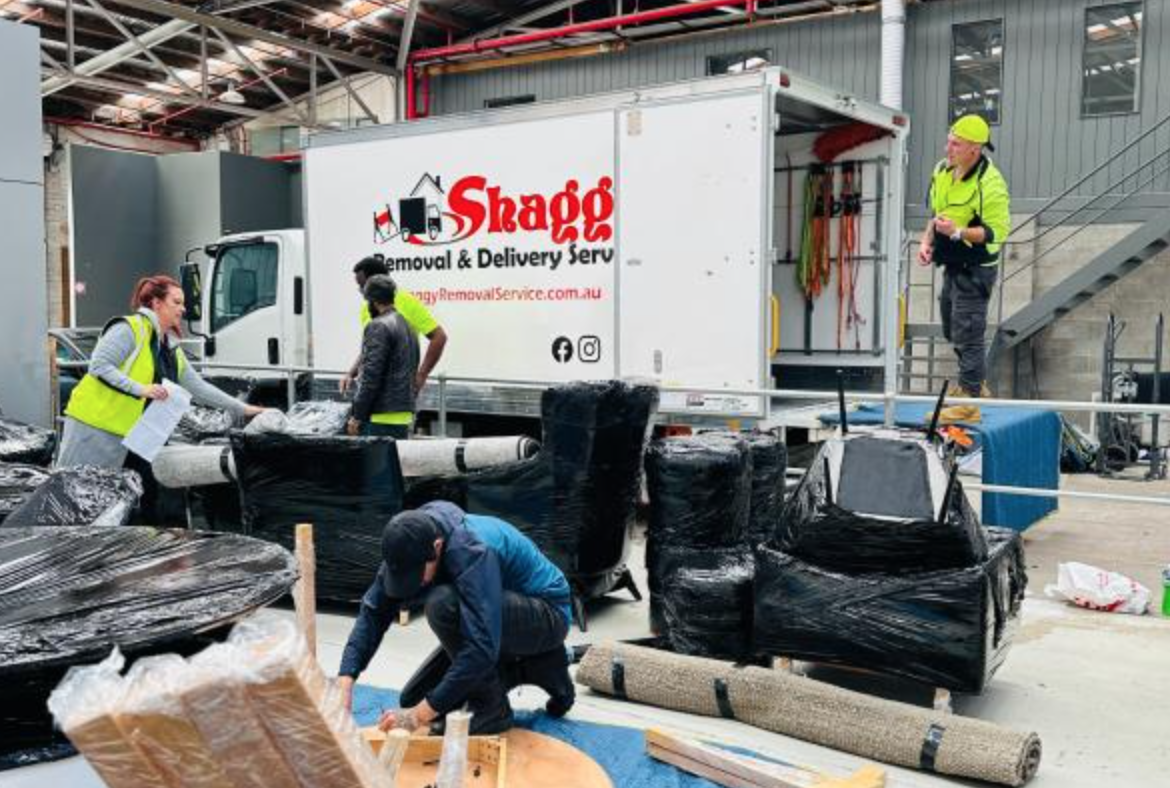
The moving phase is the most visible part of the project, but by this point the heavy lifting should already be done. The actual relocation generally includes packing support if required, crate delivery, asset labelling, disconnection and reconnection coordination, transport, loading and unloading, and placement of furniture and equipment in the new space.
Some businesses prefer a staged move across a weekend. Others need a swing space or a department-by-department transition to keep critical functions running. There is no single best model. The right method depends on your risk tolerance, team size, access constraints and the complexity of the workplace setup.
A good move day does not feel dramatic. It feels controlled, well-briefed and predictable.
What can be included after the move
Relocation does not end when the last box comes off the truck. Post-move support is often what turns a stressful move into a successful one.
That can include workstation adjustments, furniture reconfiguration, defect rectification, rubbish removal, final styling, signage updates, and support for teams settling into the new environment. In some projects, there is also a period of maintenance and minor works once staff begin using the space and practical issues become visible.
Then there is the old office. If your lease requires make-good works, that may involve removing cabling, dismantling partitions, patching walls, repainting, lifting floor coverings, and returning the tenancy to an agreed condition. This is frequently included in an office relocation scope, especially where one project team is managing both departure and arrival.
Costs and trade-offs to think about
Relocation budgets vary widely because the move itself is only one part of the total cost. The main variables are the size of the office, the amount of fit-out work in the new tenancy, furniture replacement, IT requirements, building access conditions, and whether make-good is included.
Cheaper pricing can look attractive early on, but fragmented responsibility often costs more later. If one provider handles removals, another does fit-out, another supplies furniture, and internal staff are left to coordinate landlords and contractors, the gaps between those responsibilities become your risk.
That is why many businesses prefer a single point of accountability and fixed pricing where possible. It gives clearer cost control and reduces the back-and-forth that can slow decisions and create confusion.
Choosing the right level of support
Some relocations only need straightforward logistics. Others need end-to-end project management from concept to completion. The right level of support depends on your internal capacity as much as the office itself.
If your team has time, property experience and reliable supplier networks, you may be comfortable managing parts of the move internally. If not, handing the project to a partner who can coordinate design, approvals, construction, furniture and moving services usually creates a calmer process and a more functional result.
For Melbourne businesses working to tight programs, especially in occupied buildings with access restrictions, experience counts for a lot. A relocation partner should not just move your office. They should help ensure the new space is ready to work from, reflects your business properly, and supports your people from the first day in.
The simplest way to think about it is this: an office relocation includes whatever is required to leave one workplace properly and begin operating in the next one with confidence. The more completely that is planned, the less your business has to carry on its own.