21 June 2026 · Integrity Office
When a workplace starts to feel tight, noisy or awkward to move through, the problem is rarely just a lack of square metres. More often, it is a planning issue. A good guide to workplace space planning begins with that reality – the best office layouts are not simply fuller or more stylish, but better aligned to how people actually work.
For business owners, operations leaders and office managers, space planning sits at the point where cost, productivity and staff experience all meet. It affects whether teams can collaborate easily, whether private work is genuinely possible, how visitors experience your business, and how efficiently you use your lease footprint. Done well, it can delay the need for a larger tenancy, support hybrid work, and make day-to-day operations simpler. Done poorly, it creates friction that staff feel every day.
What workplace space planning actually involves
Workplace space planning is the process of organising an office so the layout supports your people, workflow, furniture, technology and future growth. That sounds straightforward, but there is usually more going on beneath the surface. A finance team needs concentration and confidentiality. Sales may need fast access to meeting spaces. Leadership might want visibility without dominating the floor. HR may need interview rooms that feel private and welcoming.
That is why space planning is not only about fitting desks into a floorplate. It is about balancing competing needs in a practical way. You are making decisions about circulation, acoustic control, storage, front-of-house presentation, team adjacencies, flexibility and compliance, all within a real budget and a live business environment.
In many cases, the strongest layouts are not the ones with the highest density. They are the ones that reduce wasted movement, give people the right setting for the task at hand, and leave enough flexibility for change.
Start with how your business works now
Before any layout options are drawn, the first step is understanding how the workplace currently functions. Not how it looked on paper three years ago, and not how people think it should operate, but how it works in practice.
Look at attendance patterns first. If your workplace is hybrid, your peak occupancy may only happen on certain days. That changes how many fixed desks you really need. It may also increase the need for touchdown spaces, lockers and bookable meeting rooms. On the other hand, if your teams are largely office-based and spend long periods at their desks, a heavily shared environment may create frustration rather than efficiency.
Workflow matters just as much. Teams that work closely together should not be separated by long travel paths or noisy shared zones. Staff who handle confidential discussions should not be placed beside breakout areas. Reception, meeting rooms and client-facing spaces should be easy to access without forcing visitors through operational areas.
This is where a practical guide to workplace space planning needs some honesty. Many businesses say they want more collaboration, but what they actually need is better focus space with a smaller number of well-placed meeting areas. Others assume they need fewer desks because of hybrid work, only to find peak attendance still drives demand. The right answer depends on your people, not a trend.
Measure the space before you change it
A clear brief should be backed by actual data. That includes the tenancy size, structural constraints, window lines, entry points, existing services, fire egress, accessibility requirements and any landlord conditions. These factors shape what is realistic.
Just as important is understanding how much of the current office is underused. Large boardrooms that sit empty most of the week, bulky storage rooms full of archived material, oversized receptions and duplicated utility areas often consume more floor area than expected. Reclaiming that space can make a major difference without increasing your footprint.
It also helps to map pressure points. Where do bottlenecks happen? Which rooms are constantly booked out? Where do noise complaints come from? Where are people improvising because the office does not support the task? These details are often more useful than broad opinions about whether staff like the office.
Plan around zones, not just desks
One of the biggest shifts in modern office design is moving away from desk-only thinking. Most workplaces need a mix of settings, with each zone serving a clear purpose.
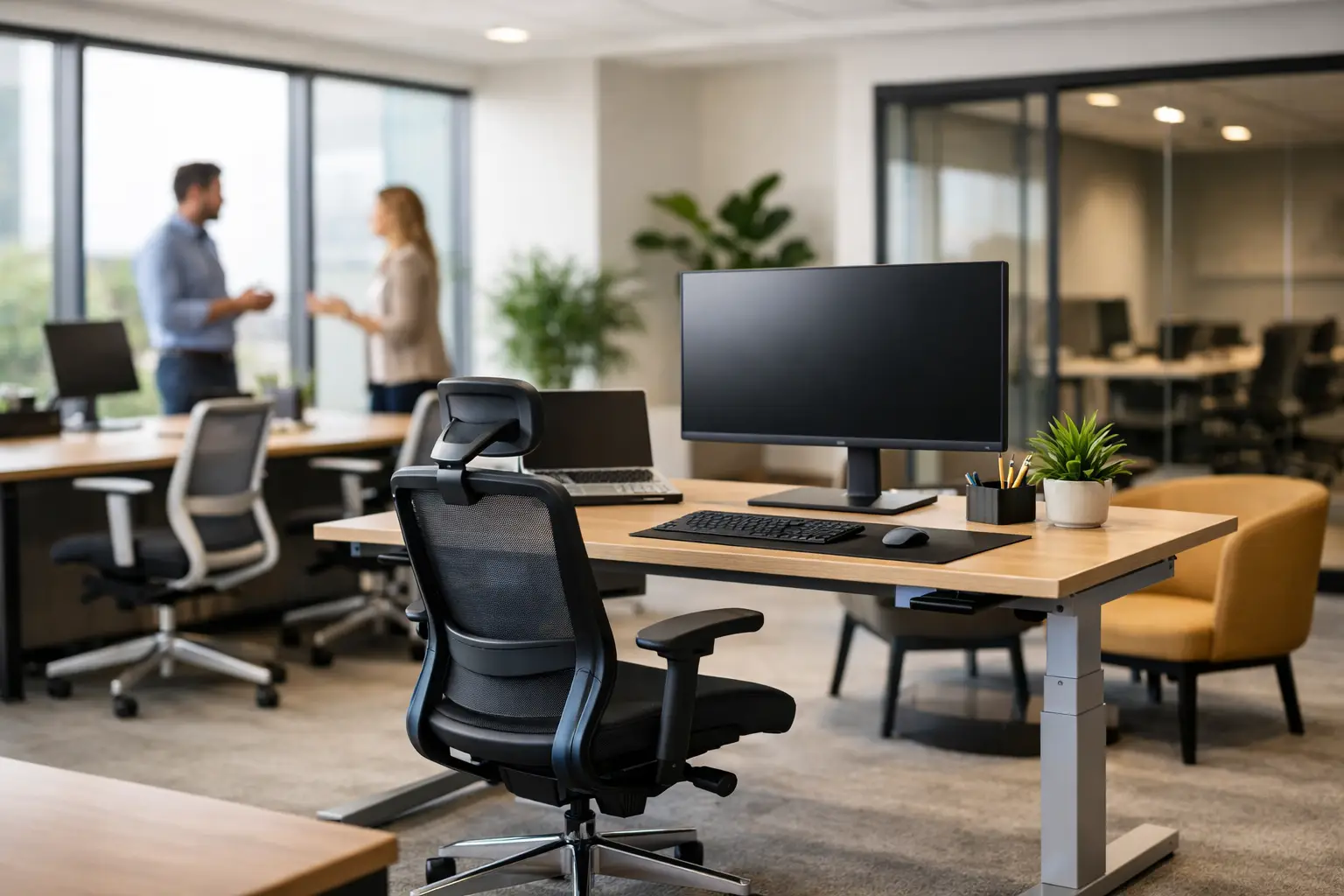
Workstations still matter, especially for teams doing focused computer-based work. But they are only part of the picture. Meeting rooms, quiet rooms, informal collaboration areas, breakout spaces, reception, utility points, storage, print areas and support spaces all influence how the office performs. If any one of these is missing or poorly located, the pressure lands somewhere else.
A common mistake is placing too much emphasis on visual openness without considering acoustics and concentration. Open plan can be effective, but only when balanced with enclosed rooms, acoustic treatments and sensible spacing. If every conversation spills across the floor, productivity drops quickly.
Likewise, not every square metre should be pushed to maximum capacity. A cramped layout can technically fit more people, but if circulation is poor and staff are constantly searching for space to meet or think, the office becomes less efficient overall.
Furniture choices shape the plan
Space planning and furniture planning should happen together. The size, type and arrangement of furniture directly affect density, comfort and flexibility.
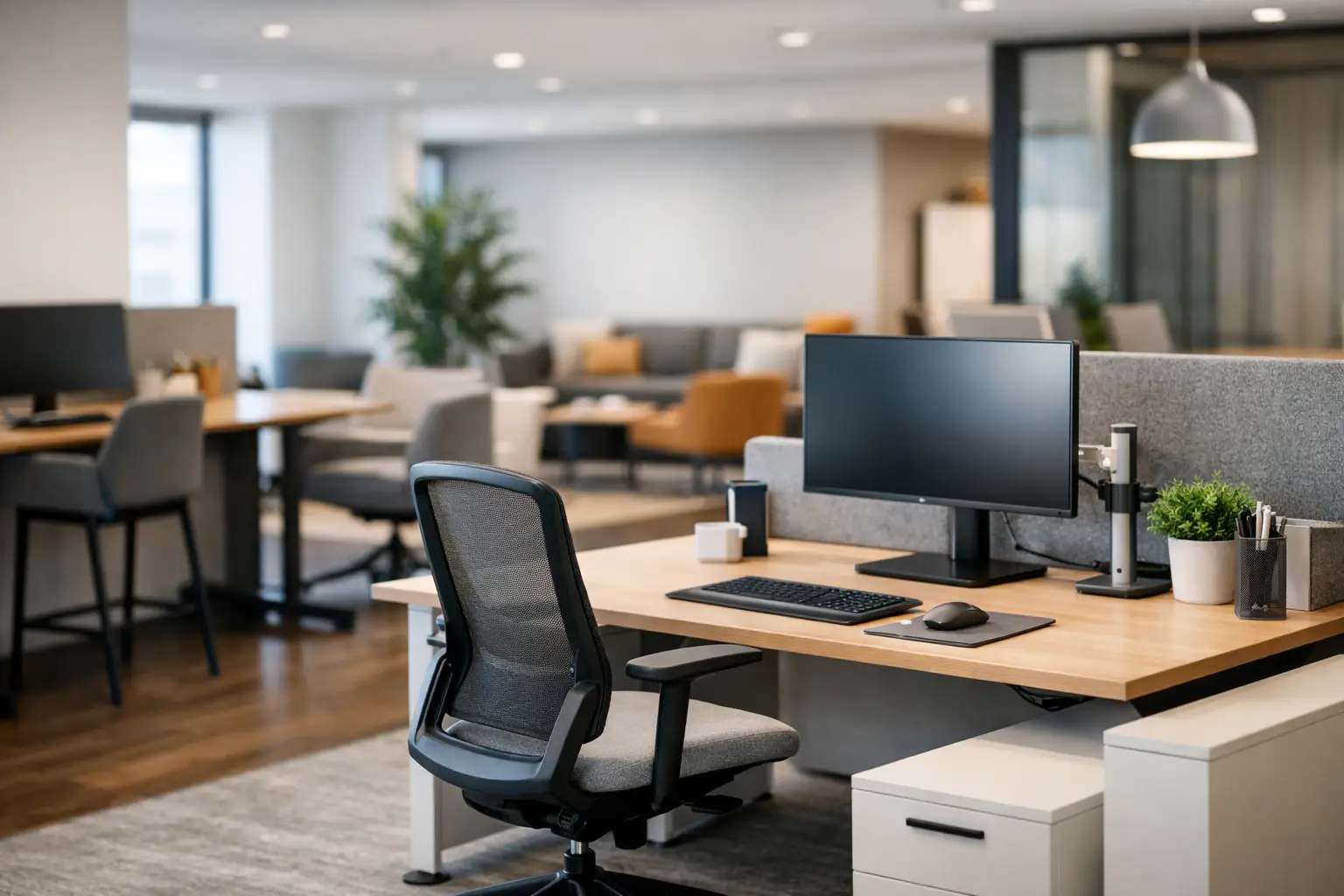
Workstations need to suit the work being done, with enough surface area, ergonomic support and access to power and data. Meeting tables should match actual meeting behaviour. There is little value in a large formal boardroom if most discussions happen in groups of three or four. Storage should be intentional rather than inherited from old habits, especially where digital systems have reduced filing needs.
Furniture also influences how adaptable the workplace will be over time. Modular settings, mobile tables and flexible meeting furniture can help businesses respond to growth or team changes without a full redesign. That said, flexibility should not become a catch-all excuse for vague planning. If every space is expected to do everything, it usually ends up doing nothing particularly well.
Leave room for growth and change
A workplace plan should solve current issues, but it also needs to support what comes next. That may mean headcount growth, new service lines, a shift in team structure or a stronger push toward hybrid work.
Planning only for today’s needs can be expensive if the office becomes outdated within a year or two. Yet overcommitting to future growth can leave you paying for underused space now. The balance depends on your business outlook, lease term and appetite for staged changes.
In practice, this often means identifying where capacity can expand without disrupting the entire office. It may involve multi-purpose rooms, furniture systems that can be reconfigured, or infrastructure planned for future workstations even if they are not installed immediately.
For organisations across Melbourne, where tenancy costs and relocation disruption can be significant, this kind of forward planning often provides better value than repeated reactive changes.
Consider compliance and practical delivery early
A strong space plan is not just attractive on paper. It must work within building rules, safety requirements and project realities.
Accessibility, emergency egress, ventilation, services coordination and landlord approvals can all affect the final layout. If these issues are left until later, plans often need to be revised, which adds time and cost. The same goes for construction sequencing in occupied offices. A layout that looks efficient may be difficult to deliver with minimal disruption unless the project approach is considered early.
This is one reason many businesses prefer a single project partner who can connect design thinking with delivery, furniture, approvals and programme management. It reduces the gaps between what is proposed and what is actually buildable.
When it is time to replan your office
Some workplaces clearly need attention. Teams have grown, hybrid arrangements have changed attendance, or the office no longer reflects the business. In other cases, the signs are quieter. Meeting rooms are always full. Staff take calls in corridors. Storage has spread into work areas. Clients get an inconsistent first impression. None of these issues sound dramatic on their own, but together they point to a workplace that is not keeping up.
If that sounds familiar, it is worth treating space planning as a business decision rather than a design extra. The right layout can improve workflow, support staff retention, make better use of rent and create a more professional environment for clients and visitors.
At its best, workplace space planning brings order to competing priorities. It gives each part of the office a purpose, helps people work with less friction, and makes the space feel considered rather than crowded. The most effective offices are rarely the flashiest. They are the ones that quietly make the workday easier.